
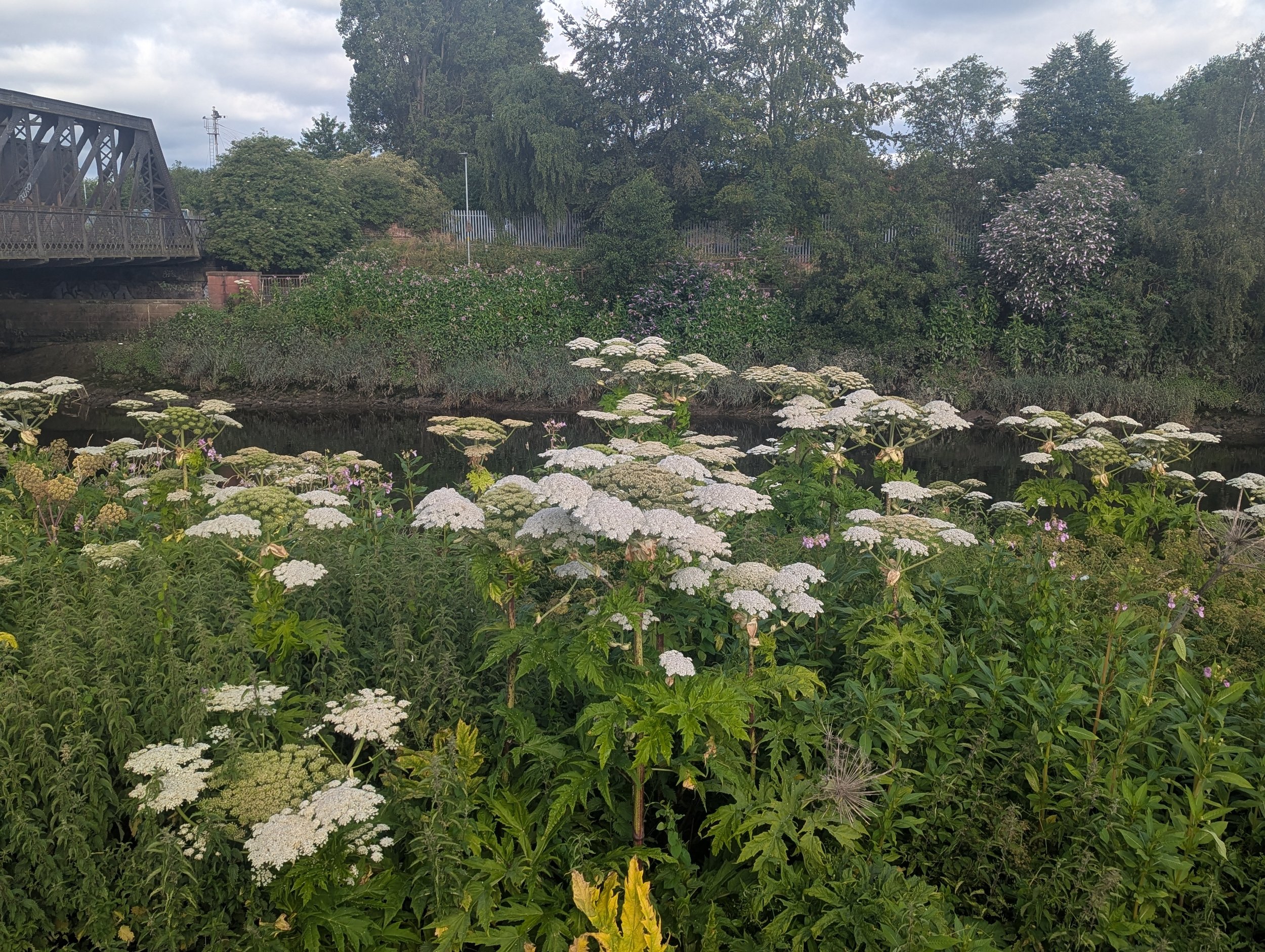
As lightweight campers, we are often outdoors or camping, perhaps even wild camping. As you are out and about in the UK you are increasingly likely to come across a towering, toxic invasive species: Giant Hogweed (Heracleum mantegazzianum).
Unlike native stinging nettles or brambles, which cause temporary discomfort, the Giant Hogweed is a severe health hazard. Knowing how to spot it can mean the difference between a memorable trip and a hospital visit.
Why Giant Hogweed is an Outdoors Nightmare
The danger lies entirely in the plant's clear, watery sap. It contains toxic compounds called furocoumarins. When this sap touches your skin and is exposed to sunlight (UV radiation), it triggers a severe reaction called phytophotodermatitis.
The Delay: You won't feel anything immediately. The chemical reaction usually takes 24 to 48 hours to show up.
The Damage: It causes painful, fluid-filled blisters and severe chemical burns.
Long-Term Effects: The affected skin can remain hyper-sensitive to sunlight for years, re-blistering whenever you go outside. If sap transfers from your hands to your eyes, it can cause temporary or permanent blindness.
How to Identify Giant Hogweed
When fully mature in mid-to-late summer, Giant Hogweed is easy to spot simply due to its immense size—it often grows between 3 to 5 metres tall. However, young or stunted plants can look dangerously similar to harmless native plants like Cow Parsley or Common Hogweed.
Look out for these explicit visual identifiers:
The Stem: Hollow, rigid, and green with distinct, dark purple blotches. It is covered in stiff, white, bristly hairs that are noticeably thick at the base of the leaf stalks.
The Leaves: Massive, dark green leaves that can grow up to 1.5 metres wide. They are sharply divided into jagged, spiky, angular points—looking almost like hyper-aggressive rhubarb leaves.
The Flowers: Appearing in June and July, they feature vast, umbrella-shaped white flower heads (umbels) up to 60cm across, looking like a giant version of cow parsley.
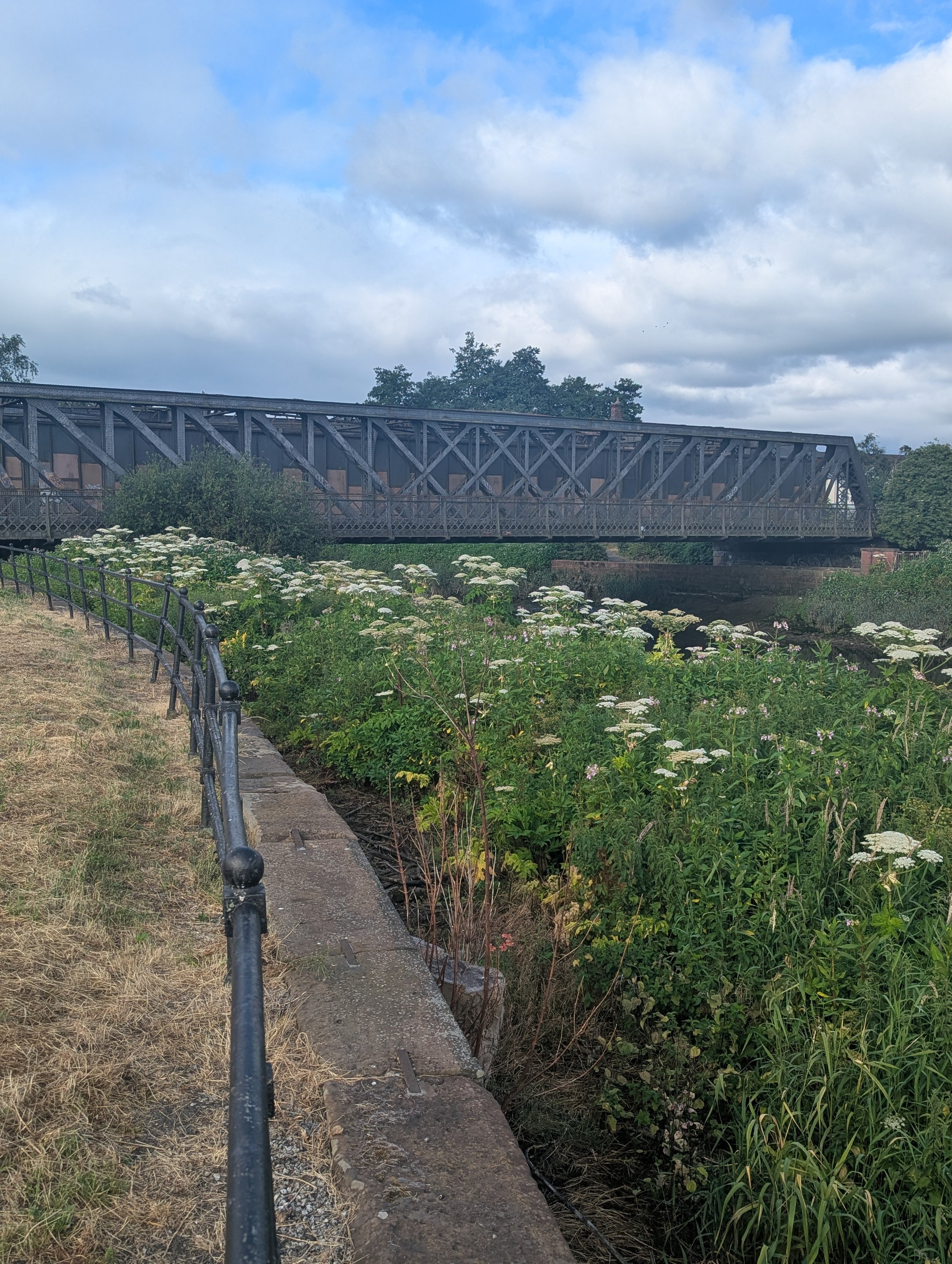
Quick Cheat Sheet: Giant vs. Common Hogweed
What to Do If You Encounter It
1. Take care in undergrowth
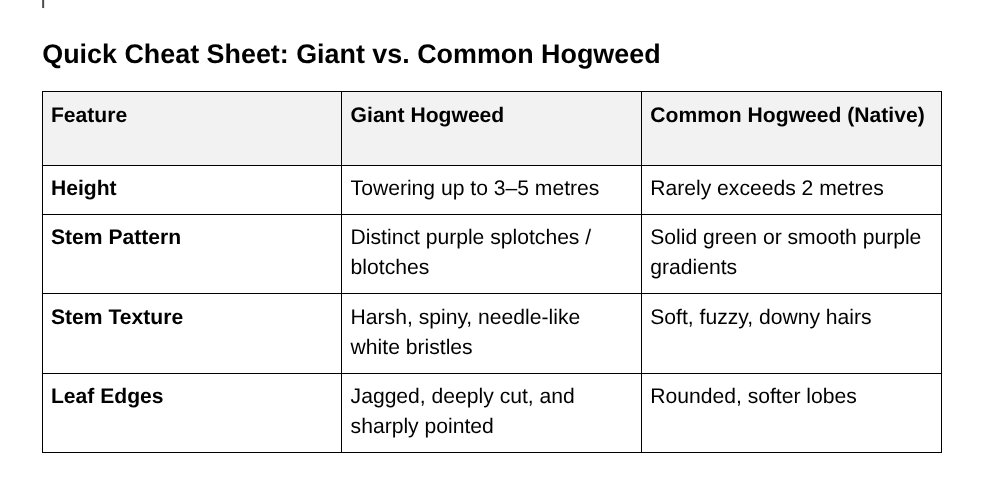
Giant Hogweed thrives on disturbed ground, making riverbanks, canal paths, woodland edges, and overgrown rights-of-way prime hotspots. Never push through tall, unidentified white-flowered weeds.
2. If You Touch It: Emergency Field Actions
If you accidentally brush against a plant or slash a stem, follow these critical steps:
Block the Sun Immediately: Cover the skin instantly with clothing, a bandage, or a jacket. The sap requires UV light to trigger the chemical burn. Keeping it completely dark buys you time.
Wash with Cold Water: Wash the affected area thoroughly with cold, clean water and soap as soon as possible. Avoid hot water, as it opens up skin pores and can let the toxins penetrate deeper.
Keep it Covered for 48 Hours: Keep that specific patch of skin entirely shielded from the sun for at least two days to ensure any trace toxins don't react.
Seek Medical Help: If blisters or burns begin to surface, do not pop them. See a doctor immediately and explicitly tell them you suspect Giant Hogweed exposure.
Keep a clean pair of long trousers and a long-sleeved shirt in your pack if you are hiking through high-risk riparian (riverbank) corridors. If your gear or clothing gets sap on it, pack it away carefully and wash it separately as soon as you get home. By the way, long trousers and long sleeved shirts also help protect you against ticks!
See It? Report It: How to Alert Authorities
Because Giant Hogweed is a highly invasive public health hazard, local councils and environmental agencies rely on the public—especially outdoor enthusiasts like campers—to map and control its spread. If you spot Giant Hogweed on your travels, do not try to hack it down yourself. Instead, take a quick photo from a safe distance, note your location, and report it using these channels:
1. Pinpoint Your Location
Before reporting, get an exact location. Because many sightings happen on remote riverbanks or trails without street names, standard addresses won't work. Use What3Words to get a precise 3-metre square grid location, or take a smartphone screenshot of your exact GPS coordinates on your mapping app.
2. Who to Contact
Local councils have a legal duty to control Giant Hogweed on public land. Search your specific council's website for "Report an invasive weed." Alternatively, use the iRecord website/app, which shares data directly with local councils and environmental protection agencies.