
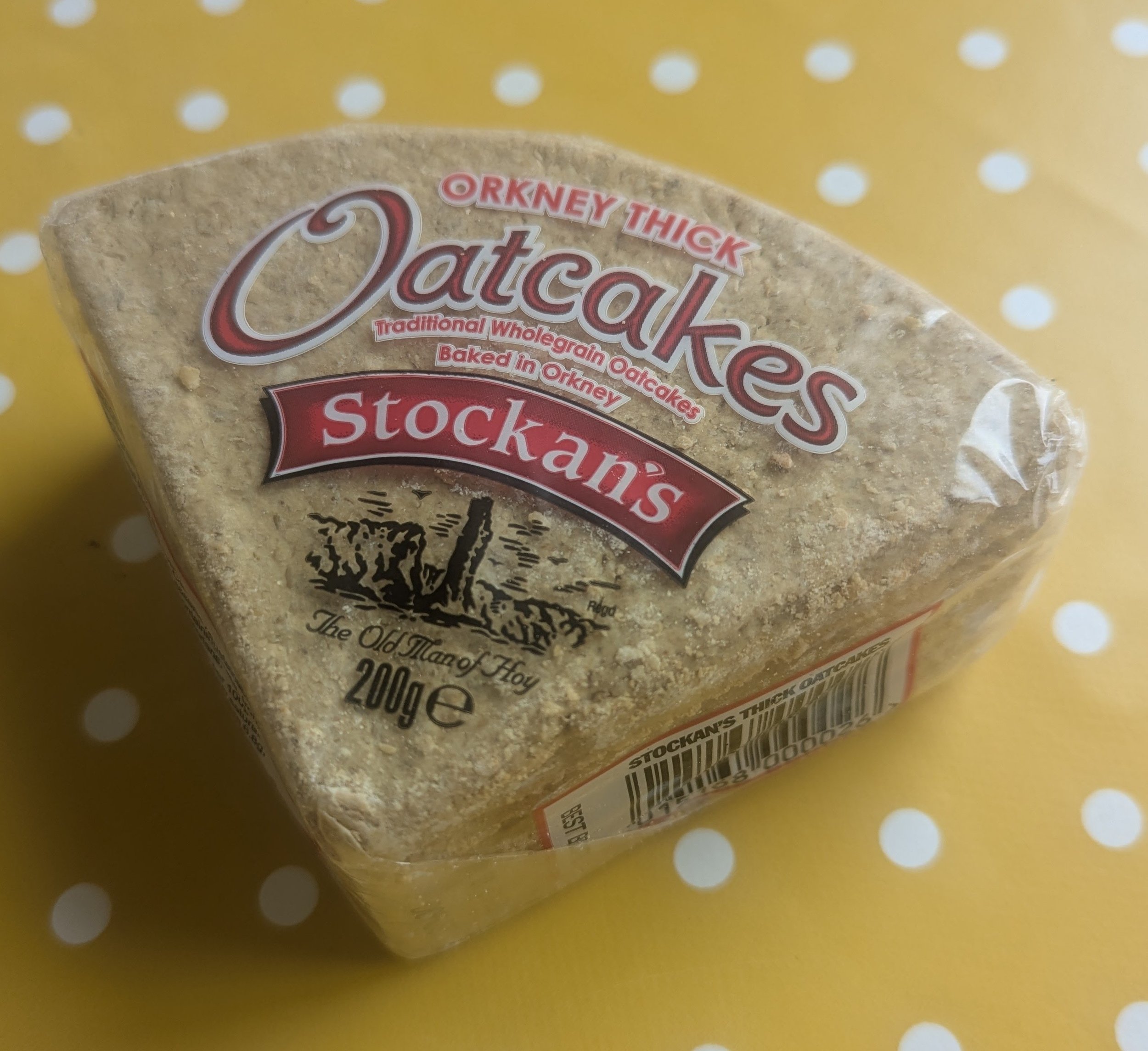
Usually on my camping trips I take wholemeal pitta bread. They are easy to carry and keep fresh for relatively longer than normal bread. However on my latest cycle trip through Scotland, from Edinburgh to Shetland, I was often a long way from a supermarket and visited local small shops. They had limited choices of bread but I came across a wide choice of oatcakes on a regular basis. Of course I've eaten oatcakes before, but on this trip I really noticed them because I found them to be tasty and quite filling - perfect when you've been cycling all day!
Now that I have returned I thought I would do a comparison between wholemeal bread and oatcakes.
It turns out that oatcakes are a great choice, especially for hungry cyclists or hikers. A complete comparison can be found below but the key points are:
40-60 calories per oatcake
Unrefined and minimally processed
High fibre
Modest amount of protein but rich in natural vitamins and minerals
Some fat content, 1-3 grams per oatcake.
Probably gluten free but cross-contamination can occur so this needs some caution.
Oatcakes
What they are: Traditional Scottish biscuits made primarily from oats. They are typically unrefined and minimally processed.
Nutritional Highlights:
Calories: Vary by size and brand, but typically around 40-60 calories per oatcake.
Carbohydrates: Provide complex carbohydrates for sustained energy release.
Fibre: Excellent source of dietary fibre, particularly soluble fibre (beta-glucans), which is beneficial for digestion, keeping you feeling fuller, and lowering cholesterol. One typical oatcake can provide around 0.7-1 gram of fibre.
Protein: Contain a modest amount of protein (around 1-2 grams per oatcake). While not a "complete" protein on its own, it contributes to overall protein intake.
Vitamins and Minerals: Rich in natural vitamins and minerals like manganese, phosphorus, magnesium, zinc, iron, folate, vitamin B6, and thiamine, which are often retained due to less processing.
Fat: Modest fat content, typically 1-3 grams per oatcake.
Gluten: Naturally gluten-free (though cross-contamination can occur in processing, so certified gluten-free options are available if needed).
Health Benefits:
Slow-release Energy: The wholegrain oats in oatcakes are less processed than flours used in bread, meaning they take longer to break down and absorb. This leads to a slower, more sustained release of energy, helping to avoid blood sugar spikes and keep you feeling full for longer. This is particularly beneficial for endurance activities like cycling and running.
Digestive Health: High fibre content aids digestion, promotes regularity, and can support a healthy gut microbiome.
Heart Health: Beta-glucans in oats are proven to help reduce cholesterol and can contribute to lower blood pressure, reducing the risk of cardiovascular disease.
Reduced Bloating: For some individuals, avoiding wheat (a primary ingredient in most breads) can alleviate bloating and digestive discomfort.
Wholemeal Bread
What it is: Bread made from wholemeal flour, which includes all parts of the wheat grain (bran, germ, and endosperm).
Nutritional Highlights:
Calories: A typical slice of wholemeal bread can range from 80-100 calories.
Carbohydrates: Good source of complex carbohydrates.
Fibre: Wholemeal bread is a good source of fibre, more so than white bread because it retains the bran. A slice of wholemeal bread can contain around 3.3 grams of fibre.
Protein: Contains protein, contributing to daily intake.
Vitamins and Minerals: Contains B vitamins, iron, and calcium, although some nutrients can be lost during the milling process even for wholemeal flour.
Fat: Generally low in fat.
Gluten: Contains gluten, as it's made from wheat.
Health Benefits:
Fibre Rich: Contributes significantly to daily fibre intake, which is essential for digestive health and can help reduce the risk of heart disease, stroke, type 2 diabetes, and bowel cancer.
Sustained Energy (compared to white bread): As a whole grain, it offers a more sustained energy release than refined white bread, though generally quicker than oatcakes due to the flour form.
Nutrient Contribution: Provides a range of vitamins and minerals.
Key Comparisons and Considerations:
Processing: Oatcakes are generally less processed than wholemeal bread, even though both are made from whole grains. The milling of grains into flour for bread can affect how quickly the carbohydrates are digested.
Energy Release: Oatcakes tend to provide a slower, more sustained energy release due to their structure and higher soluble fibre content. This makes them excellent for endurance activities like long cycling trips, where a steady fuel supply is crucial.
Fibre Type and Content: Both are good sources of fibre. Oatcakes are particularly noted for their beta-glucan content, a soluble fibre that specifically helps with cholesterol. Wholemeal bread provides both soluble and insoluble fibre.
Calorie Density: Oatcakes often have fewer calories per unit than a typical slice of wholemeal bread, meaning you might be able to eat more oatcakes for the same caloric intake, potentially increasing your fibre.
Wheat vs. Oats: For those with wheat sensitivities or those looking to reduce wheat intake, oatcakes are a clear alternative. Oats are generally well-tolerated.
Versatility: Both are versatile. Oatcakes are often used as a cracker or biscuit base for various toppings, while bread is a staple for sandwiches and toasts.
In summary, for my cycling camping trip, my switch to oatcakes was likely a very good one. Their slower energy release and high fibre content provided sustained fuel and aided digestion on the go. While wholemeal bread is a healthy choice in a general diet, oatcakes offer some distinct advantages in terms of sustained energy and potentially better digestive comfort for some individuals, especially during physically demanding activities.