THE MODERN GUIDE TO DOWN AND SYNTHETIC TECHNICAL GEAR CARE
A high-quality sleeping bag is one of the most critical investments in your outdoor gear kit. While down-filled bags typically carry a higher upfront cost than their synthetic counterparts, a well-maintained down bag can retain its performance and loft for decades. Conversely, modern synthetic insulation offers excellent wet-weather performance but requires specific care to prevent fiber degradation. Understanding contemporary maintenance techniques will drastically extend your bag's operational life and protect its thermal efficiency.
1. In the Field: Preventative Care
Proper maintenance begins long before you head to the laundry room. Implementing basic habits while camping keeps your bag cleaner and reduces the frequency of aggressive washing cycles:
Unpack Immediately: As soon as you pitch your tent, remove your sleeping bag from its compressed stuff sack. This allows the insulation—whether down or synthetic—to fully recover its 'loft' (fluffiness) and trap air efficiently before bedtime.
Utilize a Sleeping Bag Liner: Using a lightweight silk, cotton, or merino wool liner acts as a barrier against body oils, sweat, and camp grime. It is vastly easier to wash a removable liner after every trip than it is to wash the sleeping bag itself.
Air it Out: Every morning, open your sleeping bag completely and air it out over your tent or a clean branch for 10–15 minutes. This releases the ambient body moisture trapped in the fibers overnight.
Stuff, Don't Roll: When packing up camp, always stuff your bag loosely back into its sack, starting from the foot box. Avoid folding or rolling it meticulously; rolling creates repetitive crease lines that permanently crush down or fracture synthetic insulation structures over time.
2. Storage: Give It Room to Breathe
How you store your sleeping bag at home dictates how long it will keep you warm. The absolute golden rule of sleeping bag longevity is to never store your bag compressed in its small travel stuff sack.
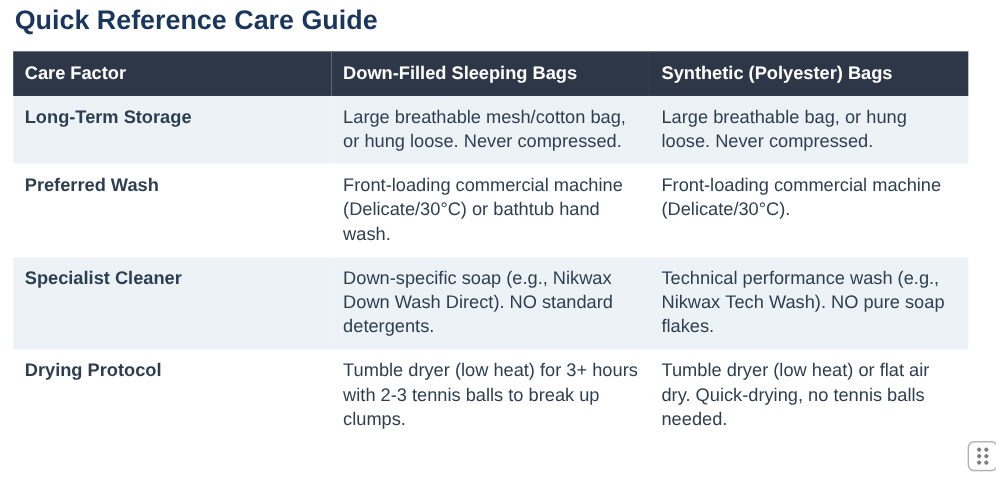
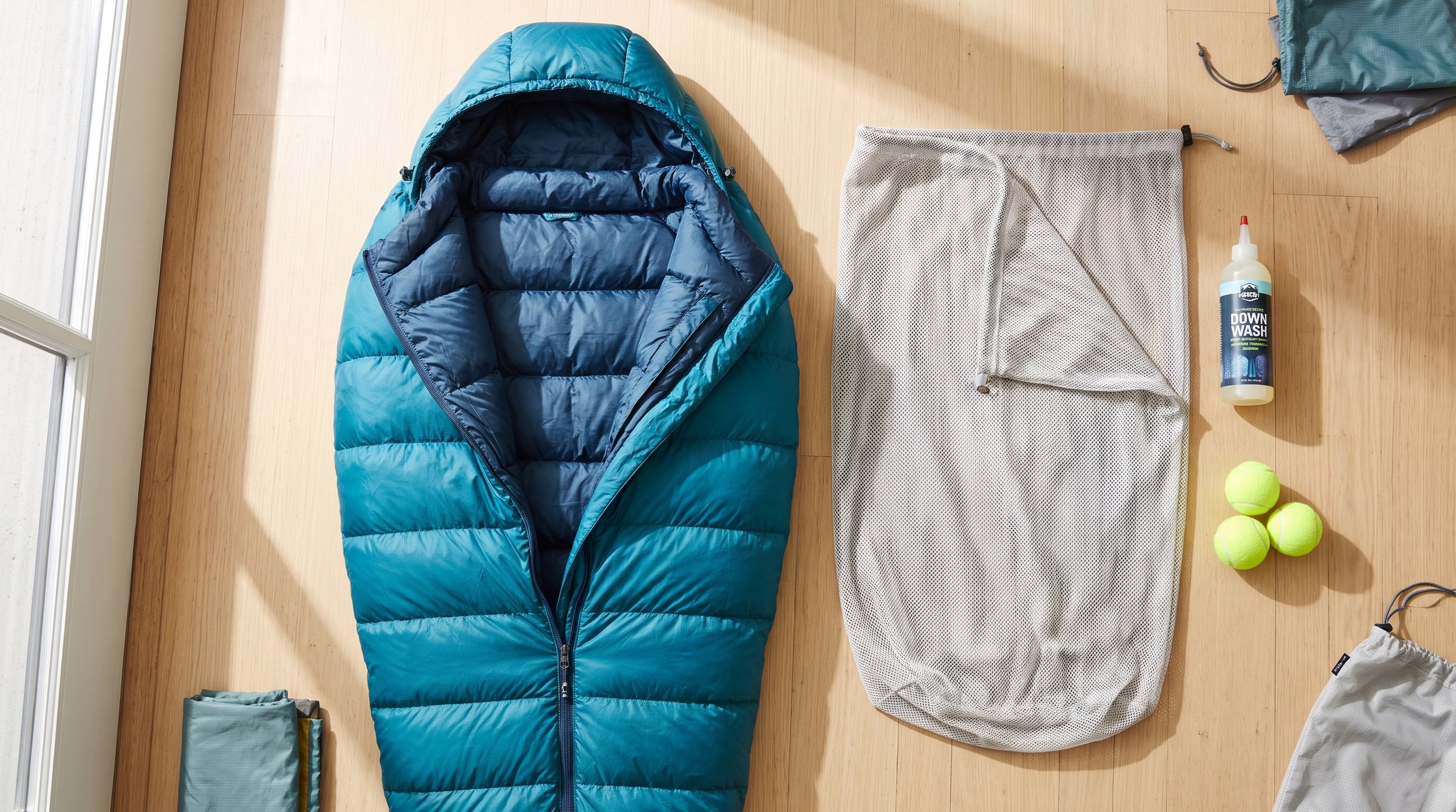
Constant compression crushes the delicate down plumules and fractures synthetic continuous-filament fibers, permanently ruining the bag’s loft and ability to retain body heat. Instead, store your bag loosely inside a large, breathable cotton storage sack, a wide mesh laundry bag, or loosely draped over a hanger in a wardrobe with ample space.
CRITICAL STORAGE WARNING
Ensure your sleeping bag is 100% dry before storing. Never store a sleeping bag in a sealed plastic bag or airtight container. Any lingering ambient moisture can cause destructive condensation, creating an environment for mold, mildew, and foul odors that ruin the technical fabrics.
3. Cleaning Down Sleeping Bags
With prolonged use, body oils and dirt inevitably migrate into the filling, causing the down to clump together and lose its loft. When your bag begins to feel flat, smells less than fresh, or shows visible grime, it is time for a wash. This should generally only be necessary once every one to two years depending on usage.
DO NOT DRY CLEAN TECHNICAL DOWN BAGS
Historically, dry cleaning was considered an option, but today it is strictly forbidden by modern gear manufacturers. The harsh industrial chemical solvents used in dry cleaning strip the natural, protective oils from down feathers, leaving them brittle, prone to breaking, and permanently incapable of standard lofting.
Option A: Automated Machine Washing (Recommended)
Modern gear care relies heavily on specialized front-loading commercial laundry machines. Never use a standard residential top-loading washing machine with a central agitator spindle. The violent mechanical twisting of an agitator will instantly rip the delicate internal mesh baffle walls that keep the down evenly distributed.
Go to a local laundromat and select a large, heavy-duty front-loading washing machine.
Set the machine to a gentle/delicate cycle using cold or lukewarm water (maximum 30°C).
Use a technical, down-specific soap such as Nikwax Down Wash Direct or Grangers Down Wash. Never use standard grocery store laundry detergents, powder detergents, or fabric softeners, as they strip the feathers and leave a film that destroys water-repellent coatings.
Run an extra rinse-and-spin cycle to ensure every trace of soap has been completely removed from the dense interior.
Option B: Hand Washing in a Bathtub
If a front-loading machine is unavailable, you can hand-wash the bag in a clean bathtub:
Fill the tub with roughly 50 liters of lukewarm water and mix in 50ml of specialized down cleaner.
Immerse the bag completely, gently massaging the soapy water into the fabric. Leave it to soak for 2 to 3 hours, turning it over occasionally.
Drain the dirty water and repeatedly press clean, clear water through the bag until all soap suds disappear.
Handling Warning: When lifting a wet down bag, treat it with extreme care. Wet down is incredibly heavy; lifting it carelessly from one end can cause the water weight to violently tear the fragile internal baffle walls. Gather the bag together in a compact ball and lift it 'like a baby,' keeping its weight supported underneath. Flat-press excess water out with your hands; never twist or wring technical gear.
The Drying Process (The Most Crucial Step)
Drying down requires patience and precise execution. Air-drying a down bag can take several days and risks mildew formation if clumps do not break up. The safest, most effective method is utilizing a large commercial tumble dryer.
Place the bag in a large capacity dryer on the lowest possible heat setting. Add 2 to 3 clean tennis balls or specialized plastic dryer balls into the drum. As the dryer spins, these balls will repeatedly strike the bag, breaking up wet clumps of down and redistributing the fluff smoothly across the baffles. Expect this process to take 3 to 4 hours. Check the bag every 30 minutes to ensure the dryer is not overheating and melting the lightweight nylon face fabrics.
4. Cleaning Synthetic (Polyester) Sleeping Bags
Synthetic sleeping bags are generally more resilient and easier to clean than down, but they still require careful handling to maintain the integrity of their crimped insulation fibers.
Machine Wash: Like down, synthetic bags should be washed in a front-loading machine on a gentle cycle. However, they should be cleaned with a standard performance technical wash (such as Nikwax Tech Wash or Grangers Performance Wash).
Avoid Pure Soap Flakes & Heavy Detergents: Do not use traditional pure soap flakes or harsh household detergents on synthetic insulation. These products coat the fine, crimped synthetic fibers, causing them to stick together, flatten out, and lose thermal efficiency permanently.
Drying: Synthetic bags dry much quicker than down. Tumble-dry them on low heat or line-dry them flat. Unlike down bags, you do not need to add tennis balls to the dryer, as synthetic sheets do not form individual localized feather clumps.