
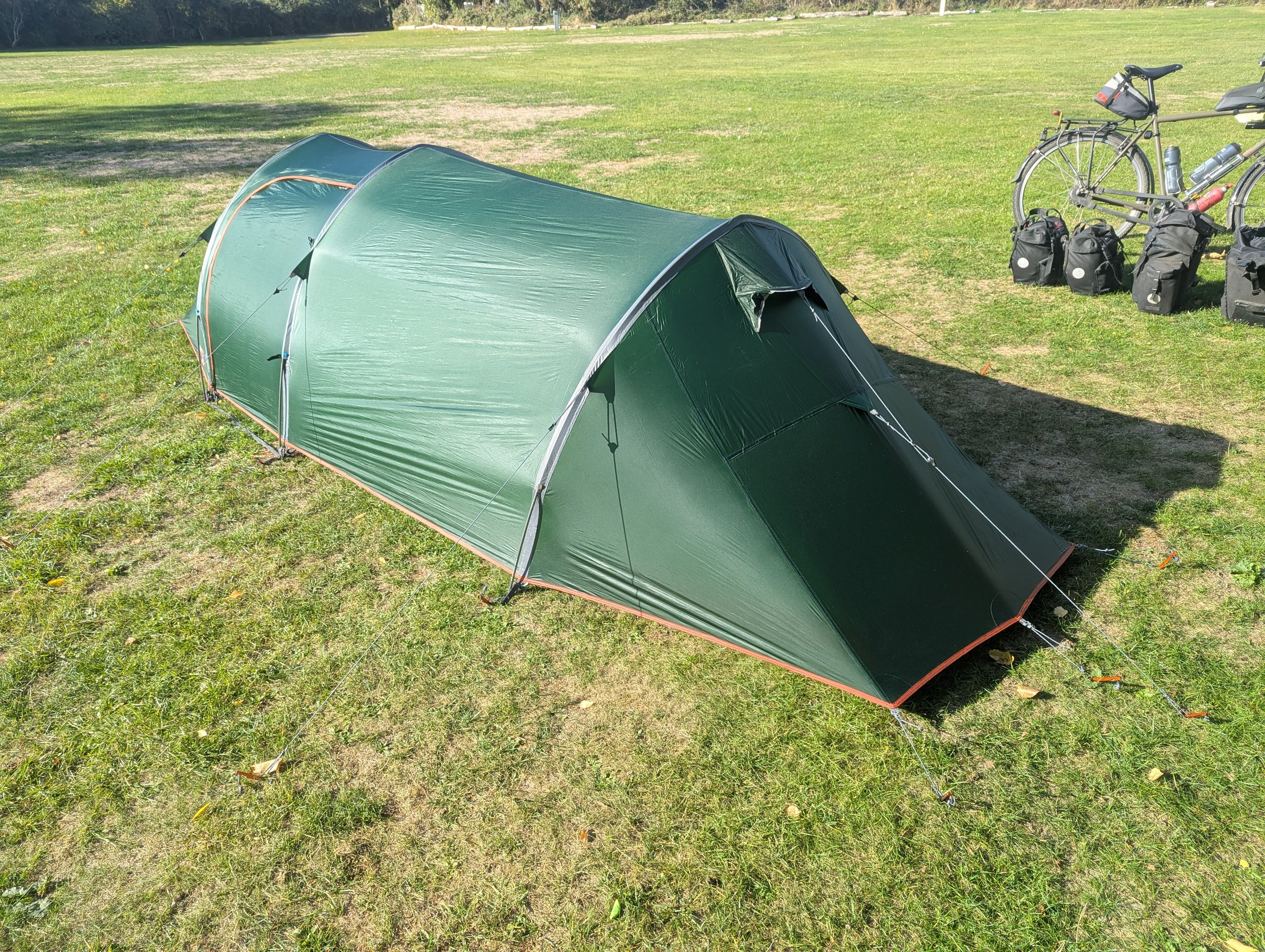
As with my cycling, I haven’t been camping for very long and have “compressed” a lot of experience into that time. It’s been fantastic fun and, as a result, I have owned several tents, latterly three Hillebergs, which are fantastic tents, especially in a gale on the West Coast of Ireland!
When I passed my beloved Hilleberg Nallo 2 on to my daughter to help get her into camping, it opened up an opportunity to reassess my own kit and buy another tent!
At 6'3" (1.9 m), standard lightweight backpacking tents often present a persistent issue: the foot end of my quilt touches the sloping inner tent fabric overnight, transferring damp condensation straight into the insulation. Furthermore, after admiring extended porch setups on trips with fellow campers (hello Sarah), I wanted a shelter that offered proper living space—somewhere dry and sheltered to sit out long, dark, wet evenings, cook comfortably and safely, and change clothes without performing gymnastics.
After thorough research, I settled on the Vango Force Ten Xenon UL 2+. I’ve been out in it for several nights now and here is how it performs in the field.
Pitching & Exterior Architecture
The Xenon UL 2+ is an asymmetric three-hoop tunnel tent pitching flysheet-first (or all-in-one), which is essential for wet British conditions. The poles slide smoothly into external low-profile sleeves, tensioning into alloy foot brackets.
Pitching: Once pegged at the windward rear, inserting the three colour-coded alloy poles and pegging out the extended front takes under five minutes.
Tension & Stability: Equipped with Vango’s internal TBS Pro (Tension Band System), the structure resists sideways deformation in gusty crosswinds remarkably well for an extended tunnel design.
Fabric & Build: The flysheet uses a lightweight, high-tenacity ripstop nylon with silicone/PU coating. Seams, tie-outs, and orange-accented, reflective guy lines feel well-reinforced.
Living Space & The Extended Porch
The standout feature of the "UL 2+" model is the cavernous extended vestibule:
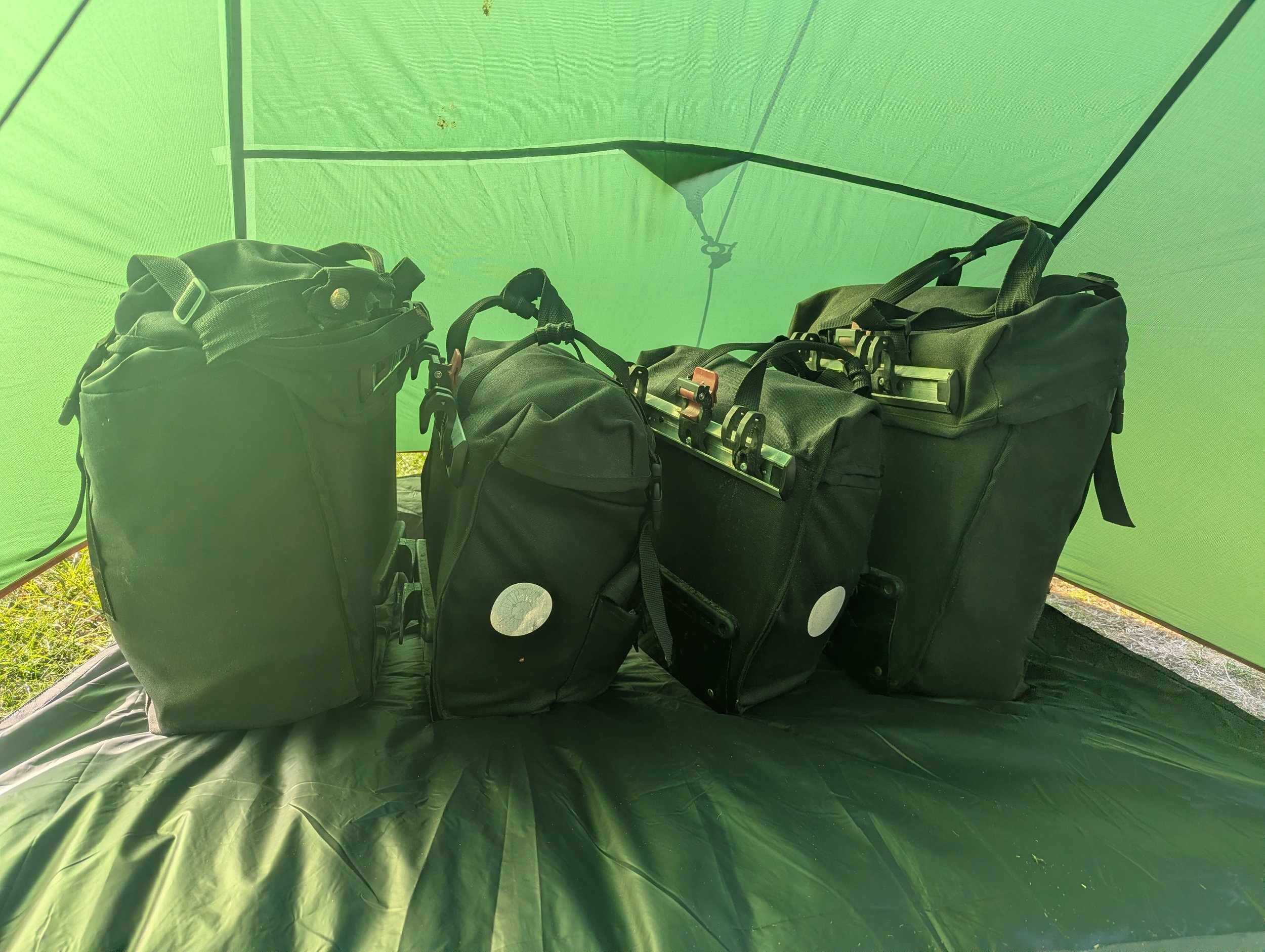
Gear Swallowing Capacity: The porch easily accommodates a full 4-pannier touring set lined up side-by-side with ample clearance left over. Two backpacks would also easily fit into this space.
Wet-Weather Usability: There is genuine headroom to sit up, brew up out of the breeze, and peel off wet waterproofs and muddy shoes before stepping into the inner tent.
Door Options: The two large side entrances allow easy entry and exit without clambering over stored luggage.
Inner Dimensions: A Tall Camper’s Verdict
For anyone over 6 feet tall, the inner tent is the real test—and here the Xenon delivers:
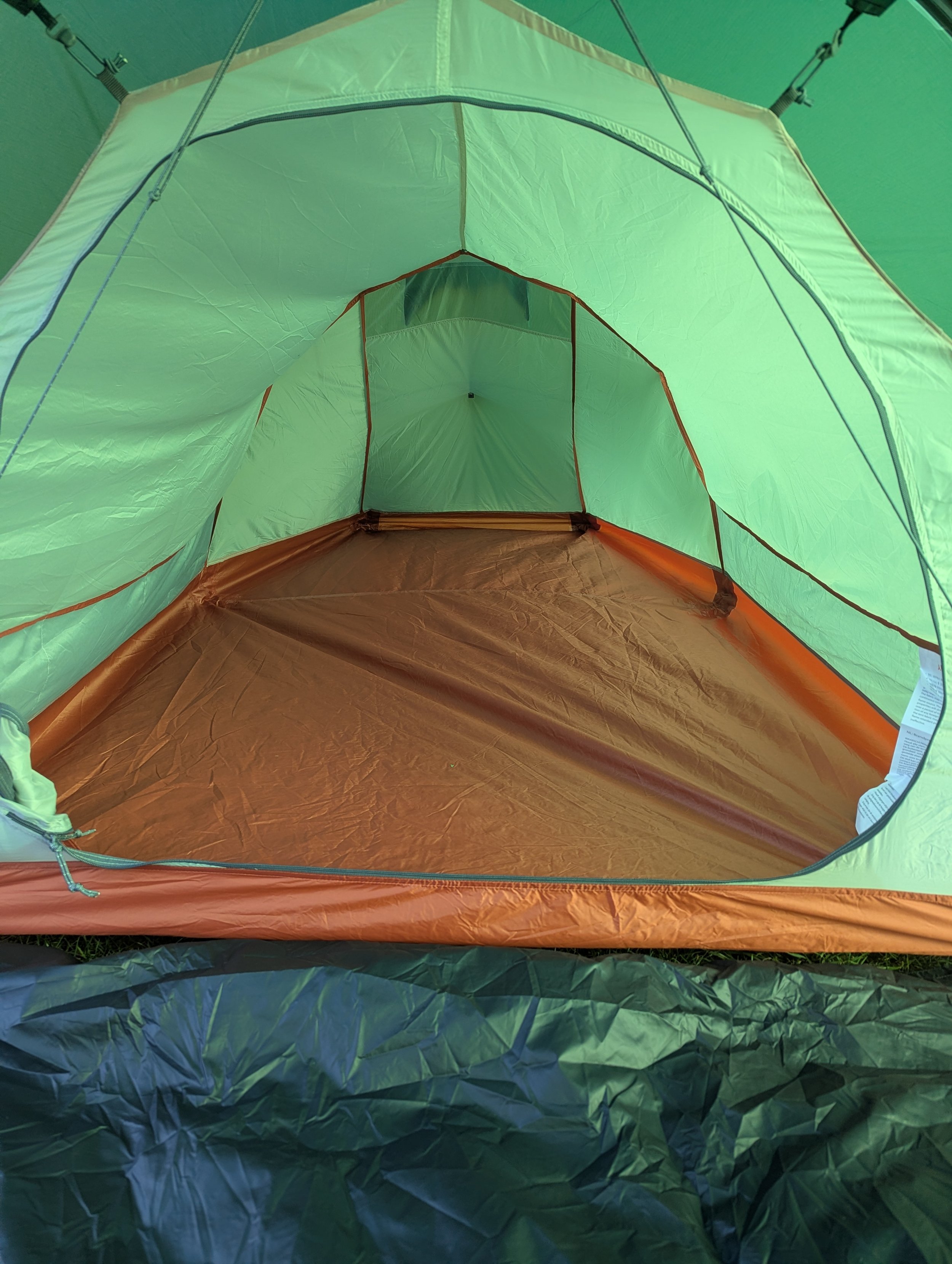
Length: At 2.3 m (7'6") long, it completely solves the quilt condensation issue. Even when sleeping on a deep, long and wide sleeping mat, my head and toes have generous clearance from both ends of the inner wall.
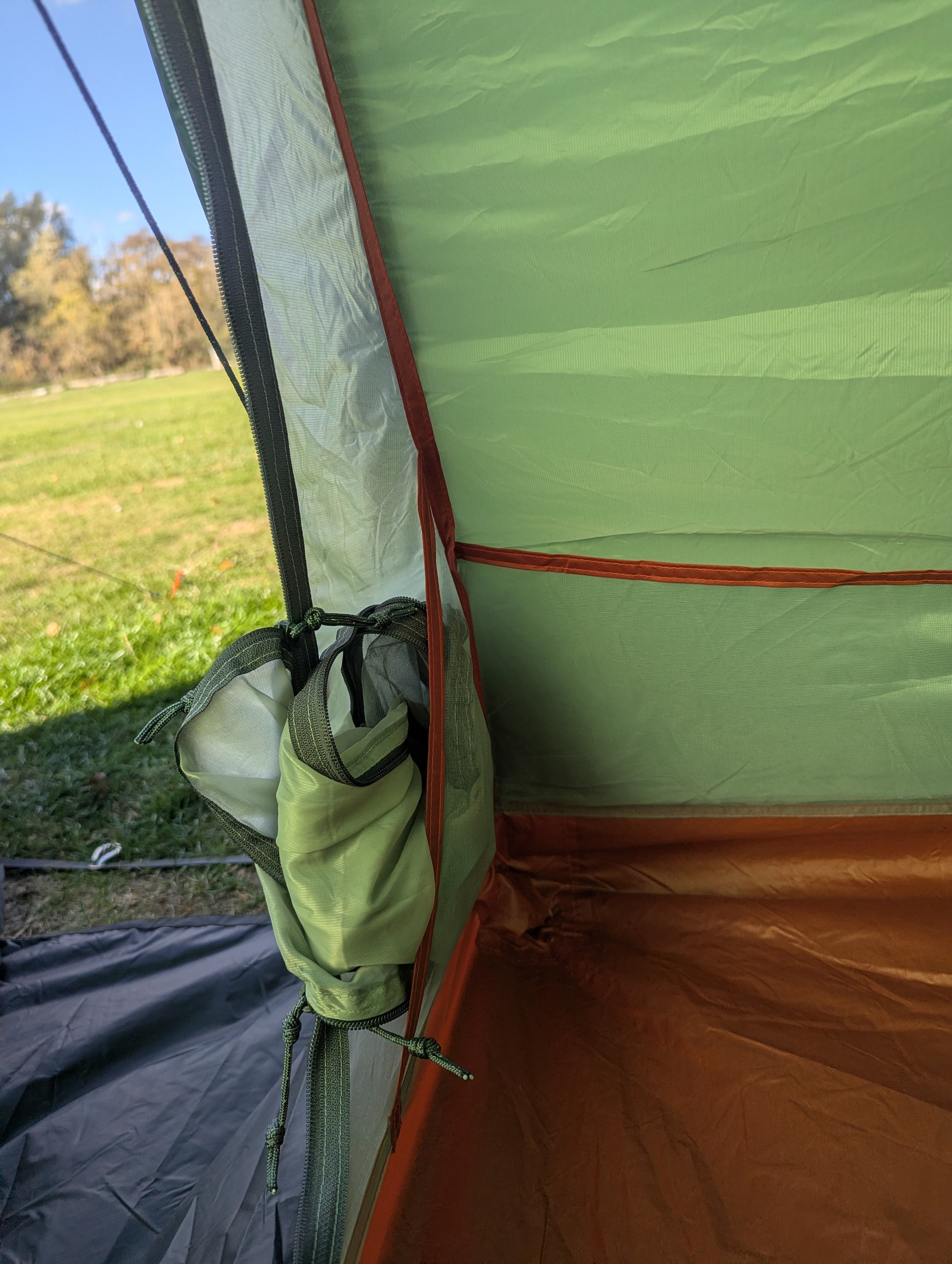
Width & Storage: Billed as a 2-person tent, it serves as a palatial solo shelter or a cozy setup for two. Thoughtful internal details include deep mesh side pockets along each side of the inner for stashing essentials, well-positioned vent cowls at each end to manage moisture, and neat tie-backs for the inner doors.
Internal Atmosphere: The breathable ripstop inner pairs with the low and high apex vents to maintain steady airflow, keeping stuffiness and condensation to a minimum.
Specifications at a Glance
Style: 3-Pole Asymmetric Tunnel (Extended Porch)
Inner Length: 230 cm
Pack Weight: ~2.1 – 2.4 kg (depending on peg setup and footprint)
Pitching Time: 5–7 minutes
Pros & Cons
Pros:
Genuine 230 cm inner length eliminates quilt-contact dampness for campers 6'3" and taller.
Massive extended porch provides true three-season living and gear storage space. Although I will be quite comfortable in using this tent during the winter, the fly is low cut and the inner door mesh has a cover that can be completely closed.
Flysheet-first pitching keeps the sleeping compartment completely dry during rainy setups.
Excellent weight-to-volume ratio for cycle touring or lightweight camping.
Cons:
Long footprint requires a reasonably flat, unobstructed pitch compared to a standard 2-pole wedge or dome. This will not be a tent to take wild camping when I am looking for an unobtrusive pitch which might have limited space!
Like all silicone-treated nylon flysheets, it may require a quick guyline tweak after soaking up an initial evening downpour. Although the Welsh rain last week didn’t give me that problem, probably because I made sure the fly was taught during pitching.
Conclusion
Coming from the benchmark durability and craftsmanship of Hilleberg, I was prepared to find compromises. However, the Vango Xenon UL 2+ has proven to be an exceptional shelter. It directly addresses the two biggest pain points for taller campers: generous sleeping clearance without wet toes, and a genuinely usable living porch that turns dreary, rain-soaked evenings into comfortable campsite downtime.
Oh, and at £410 it is MUCH cheaper than any of my Hillebergs!