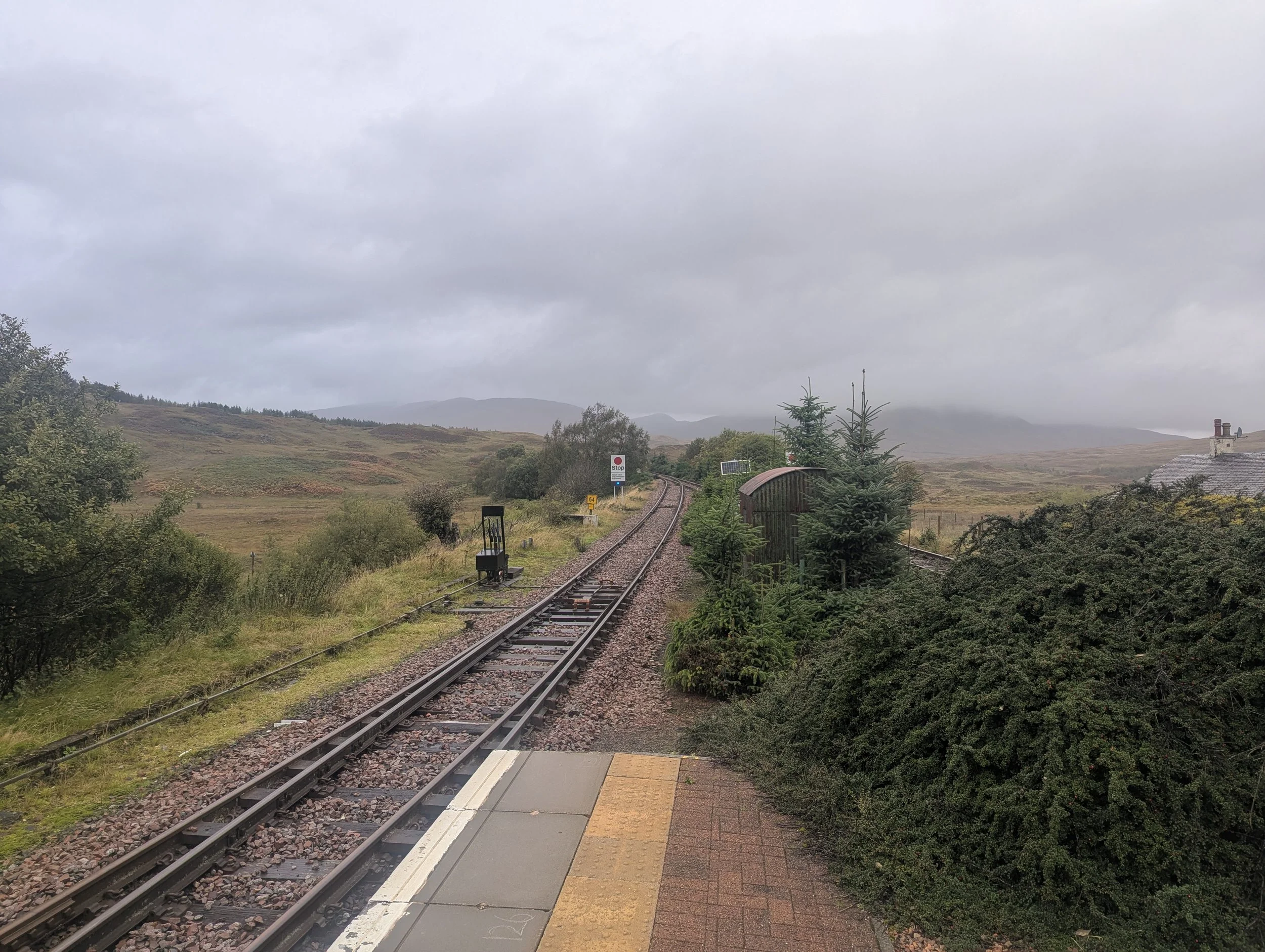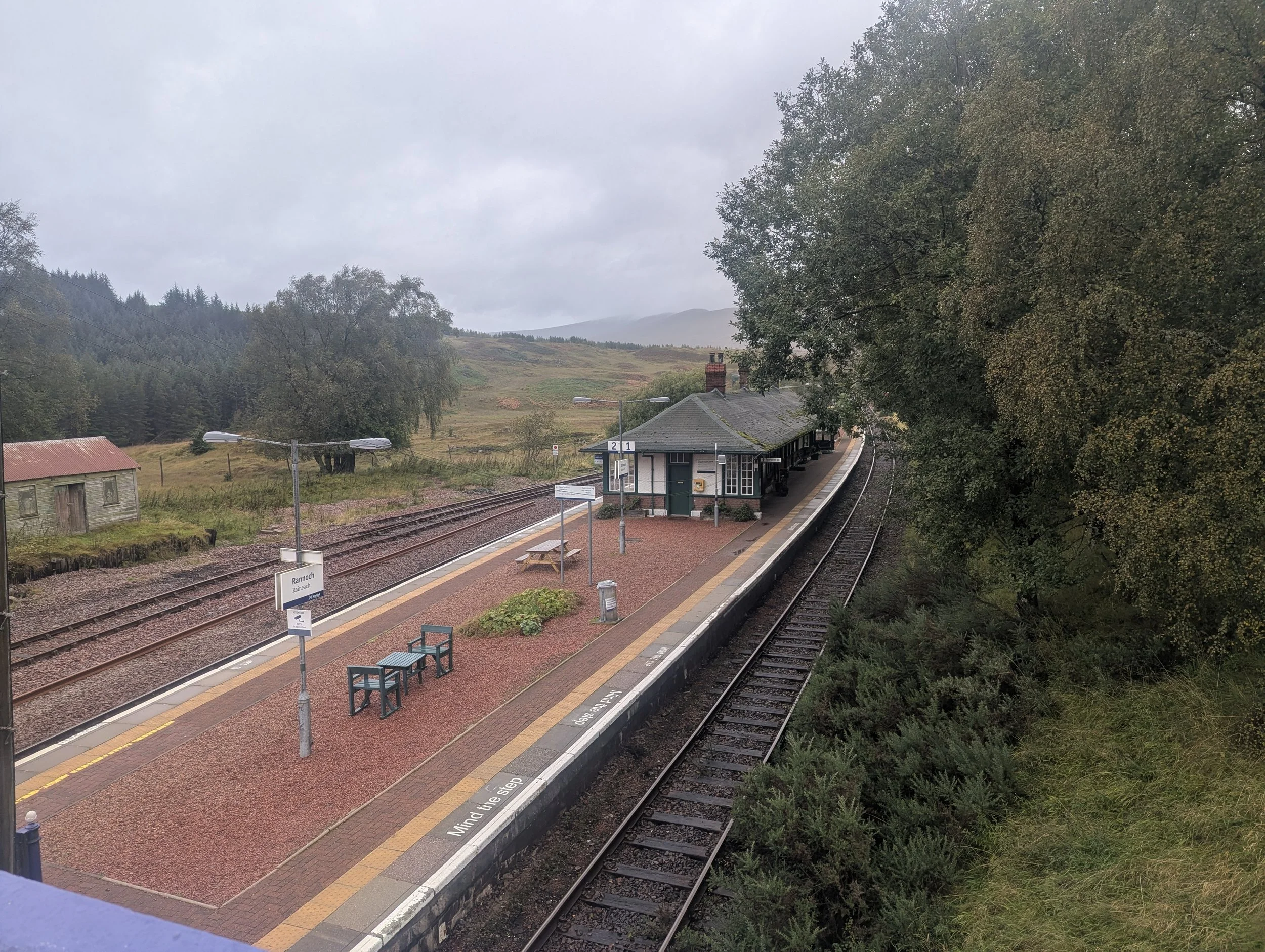
Looking down on Rannoch Station from the footbridge you can see the desolate moors and mountains in the background.
Few rail journeys in the British Isles can rival the West Highland Line as it skirts the wild expanse of Rannoch Moor. For cycle tourers and hillwalkers, Rannoch Station feels less like a simple transit stop and more like an improbable frontier outpost—a thin sliver of platform flanked by peat bogs, heather, and distant peaks.
Arriving on a damp Friday afternoon at the tail end of September, after days battling headwinds across central Scotland, my plan hit a classic railway snag. With an Advance ticket booked for the following morning, I watched the afternoon trains rumble away. The final departure of the day—the overnight Caledonian Sleeper bound for London Euston—slipped away into the night at around 9:00 p.m., leaving behind an eerie, breathless quiet. The torrential Highland rain set in, drumming against the roof and soaking the platform.
Under normal circumstances, an unheated, locked-up rural halt would leave a touring cyclist with one grim choice: pitch a tent in the boggy, waterlogged turf nearby and spend the night shivering in damp gear. But Rannoch Station has an extraordinary secret that transforms an accidental stranding into an unforgettable Highland sanctuary.
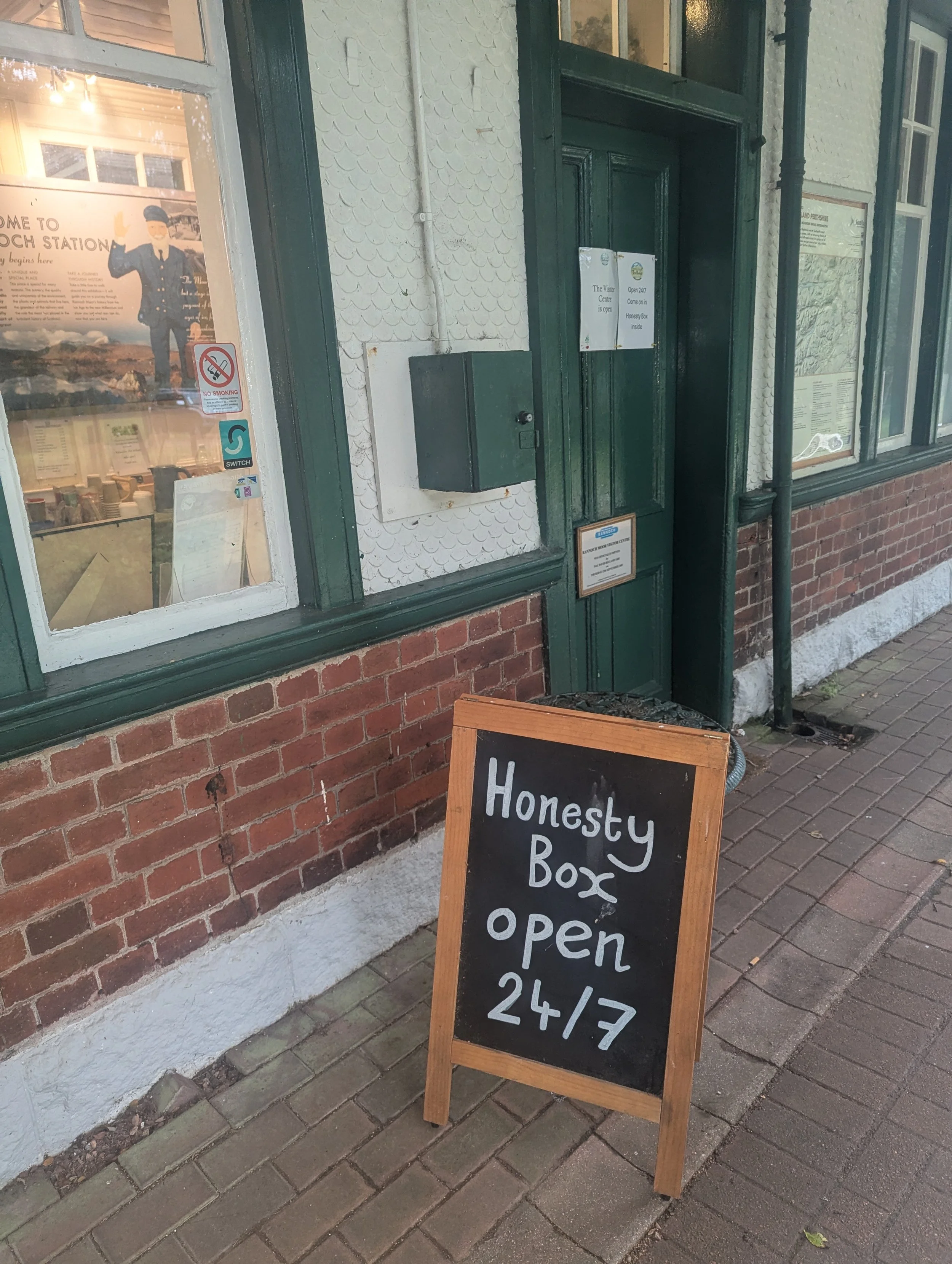
The 24/7 Oasis
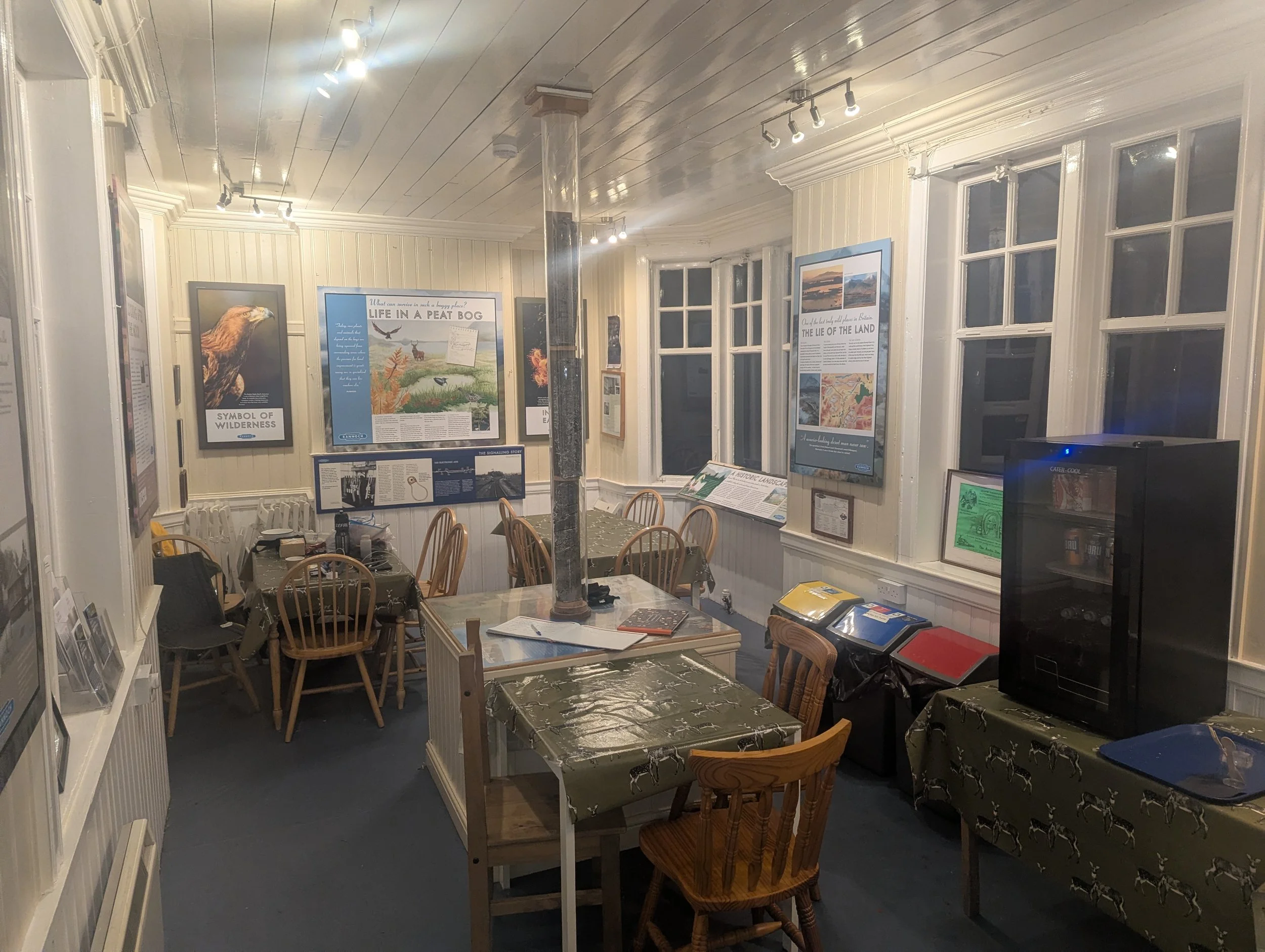
Tucked inside the station building, adjacent to the daytime tearoom, sits the Rannoch Moor Visitor Centre. Opened two decades ago by the late botanist David Bellamy, also a former President of The Camping and Caravanning Club, the room remains unlocked, warm, and illuminated long after the last train has gone.
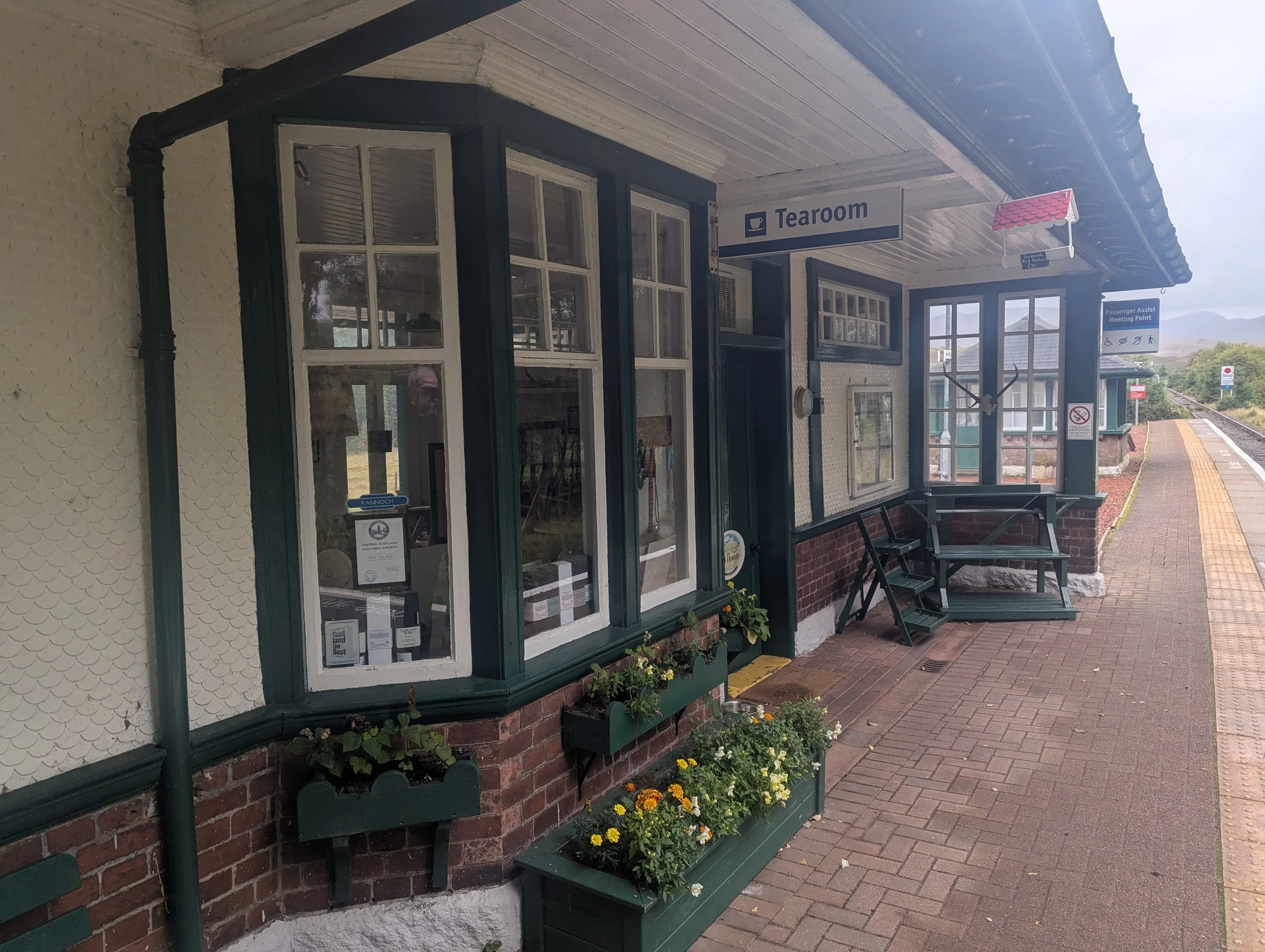
Stepping inside out of the deluge is like walking into an unstaffed mountain refuge with the comforts of home. The room is heated, quiet, and equipped with power sockets to revive flat phone batteries and GPS units. Display boards detailing the natural history of the Great Moor—from peat bog ecology to golden eagles—line the tongue-and-groove walls, while a large glass display column of moorland peat core stands right at its centre.
What makes the space truly remarkable, however, is the tearoom's approach to hospitality. Operating entirely on an honesty policy around the clock, the room features an honesty box alongside a modern electronic card terminal. Weary travelers can browse shelves and fridges stocked with sandwiches, biscuits, crisps, soup, and tea and coffee facilities. In an age where station facilities elsewhere are increasingly gated, shuttered, or stripped of human trust, this 24-hour lifeline—backed up by immaculately kept, accessible station toilets—is a masterclass in generosity and community spirit.
Echoes of the Navvies
Waiting out the dark hours at Rannoch gives you time to appreciate the sheer human effort that put a railway here in the first place. The moor was once deemed utterly impassable, swallowed by depths of peat that swallowed earthworks whole.
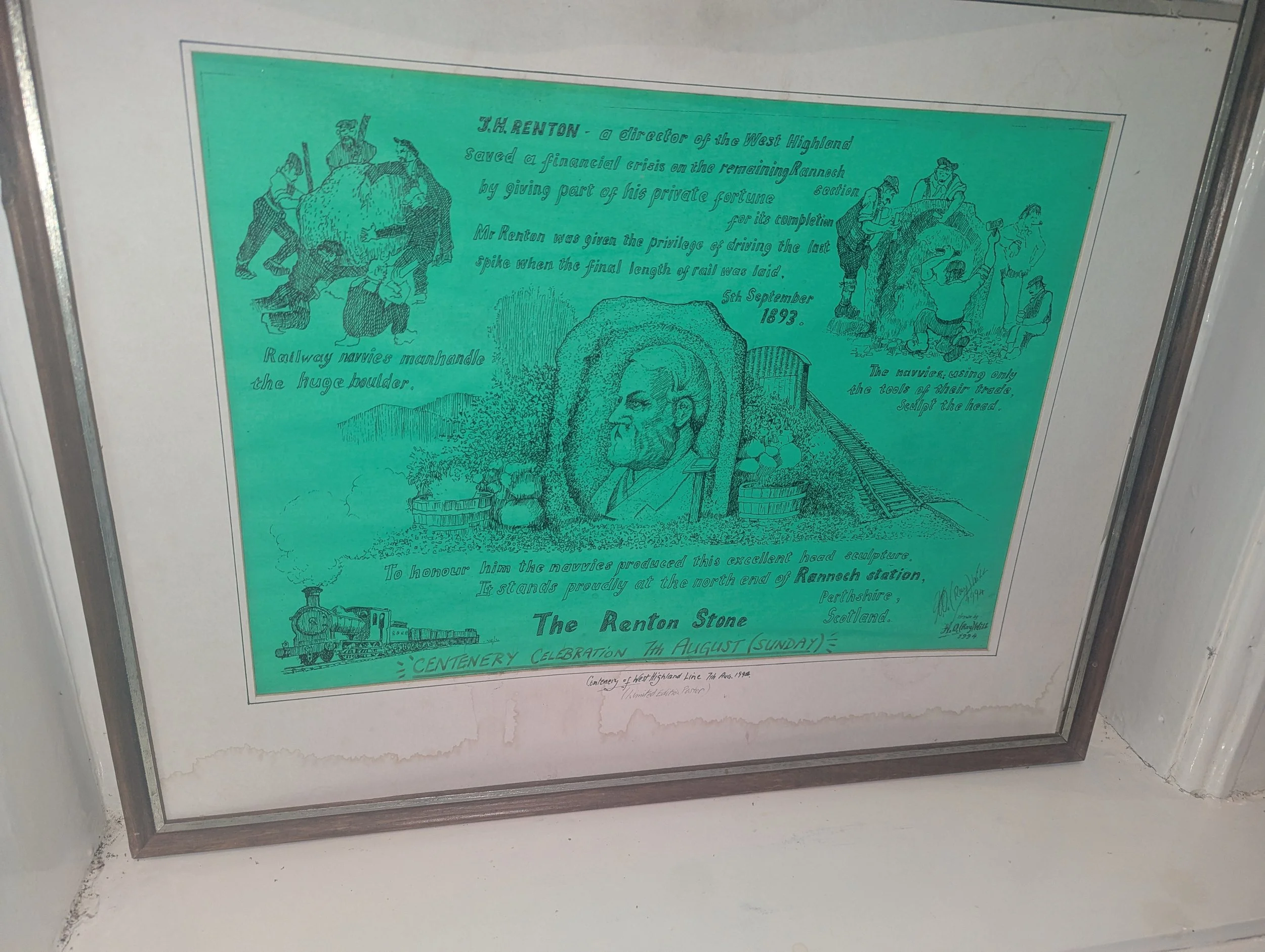
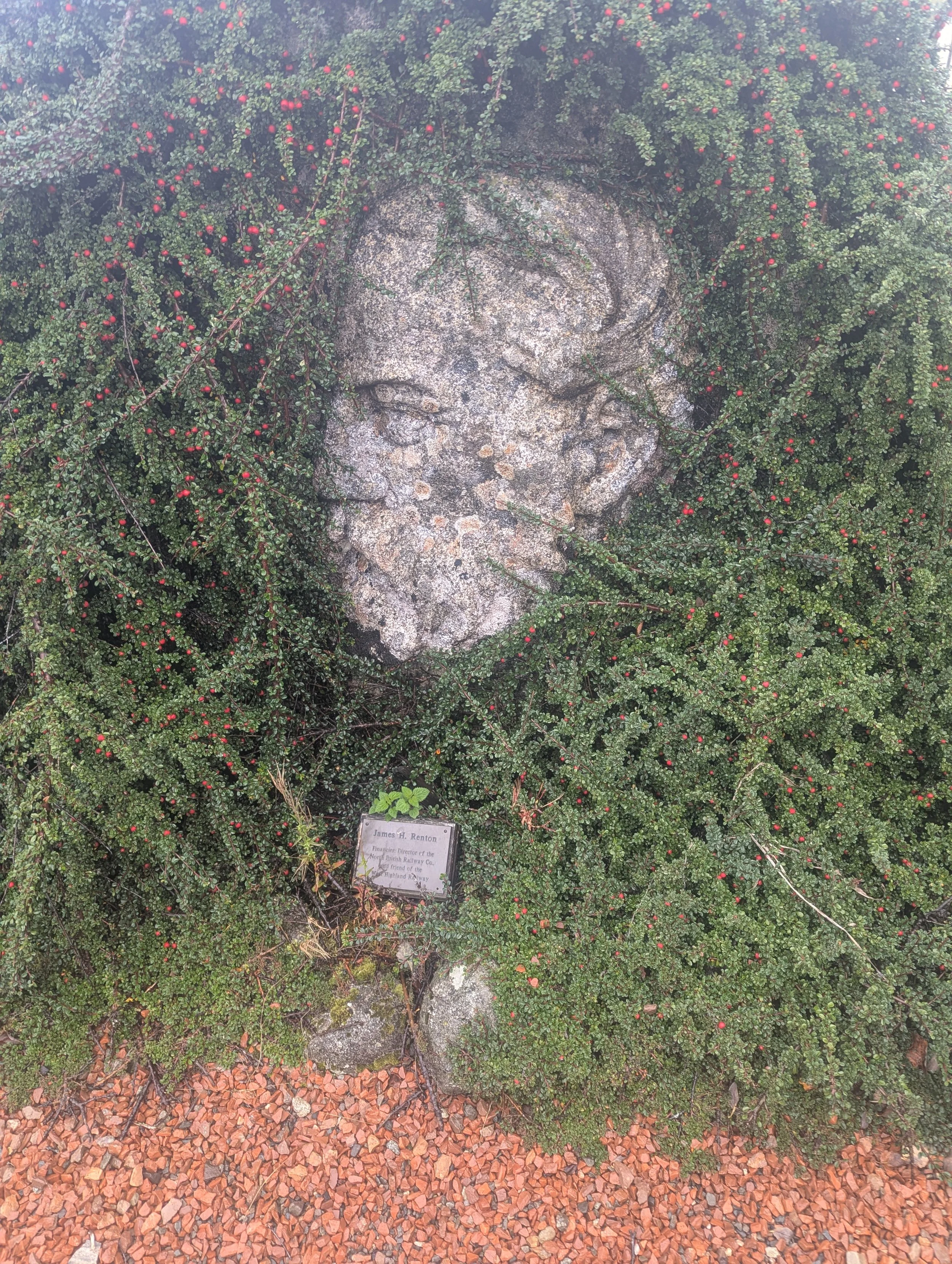
Outside near the tracks stands the Renton Stone, a boulder sculpted with the face of James H. Renton. A director of the North British Railway, Renton famously stepped in with his personal fortune in 1893 when construction funds ran dry, saving the line from abandonment and earning the gratitude of the navvies who carved his likeness into the granite with their own tools. Reading the commemorative history posted on the visitor centre wall while the rain lashes the windows gives the room a vivid sense of continuity: this station has always depended on quiet acts of resolve to keep the route alive.
Dawn on the Moor
By the time the first light of Saturday morning began to silhouette the surrounding hills, the rain had eased to a classic Highland mizzle. Having slept dry and warm, enjoyed a hot breakfast, made using the kettle, and repacked my panniers in comfort, I stepped out onto the platform to meet the morning train south.
Missing a connection or facing an enforced overnight layover is usually the low point of any long tour. Yet Rannoch Station turns what could have been a miserable, rain-soaked bivvy into a testament to highland hospitality and civic trust. If you ever find yourself pedalling or trekking into the heart of Perthshire, don't rush to leave—this lonely platform has more warmth to offer than almost anywhere on the network.