
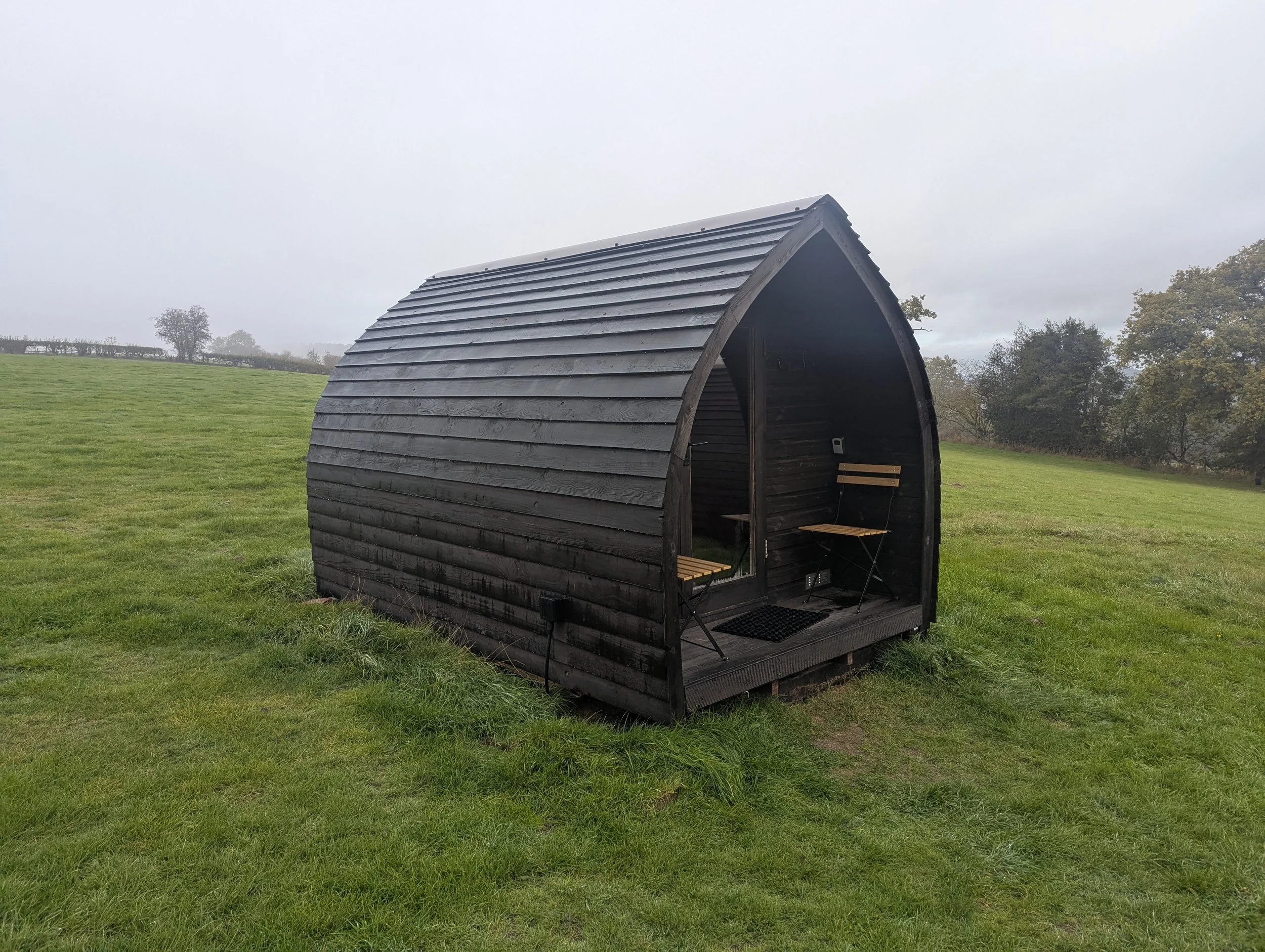
Basic but very cozy!
As late autumn sets in and the forecast turns toward unrelenting drizzle, sodden pitches, and biting winds, even the most devoted among us can find our enthusiasm tested. The prospect of wrestling nylon in a gale or packing away a dripping flysheet into panniers or a rucksack isn't always the weekend tonic we are looking for. Yet, the urge to get out, brew up outdoors, and wake up close to nature doesn’t hibernate just because British winter has arrived.
Enter the camping pod.
To the purist, the idea of an arched timber hut might initially raise an eyebrow. Isn’t that a step too far toward glamping? Having recently spent a night in one to test the waters, my conclusion is quite the opposite: for off-season touring, a basic pod sits firmly within the spirit of lightweight camping—it simply swaps the tent fabric for four solid wooden walls.
The "Semi-Camping" Reality
The pod I stayed in was delightfully unfussy. There were no Egyptian cotton sheets or boutique hotel pretensions here. What you get is an unadorned shelter: essentially a bare timber frame with a firm, wipe-clean plastic-covered mattress base.
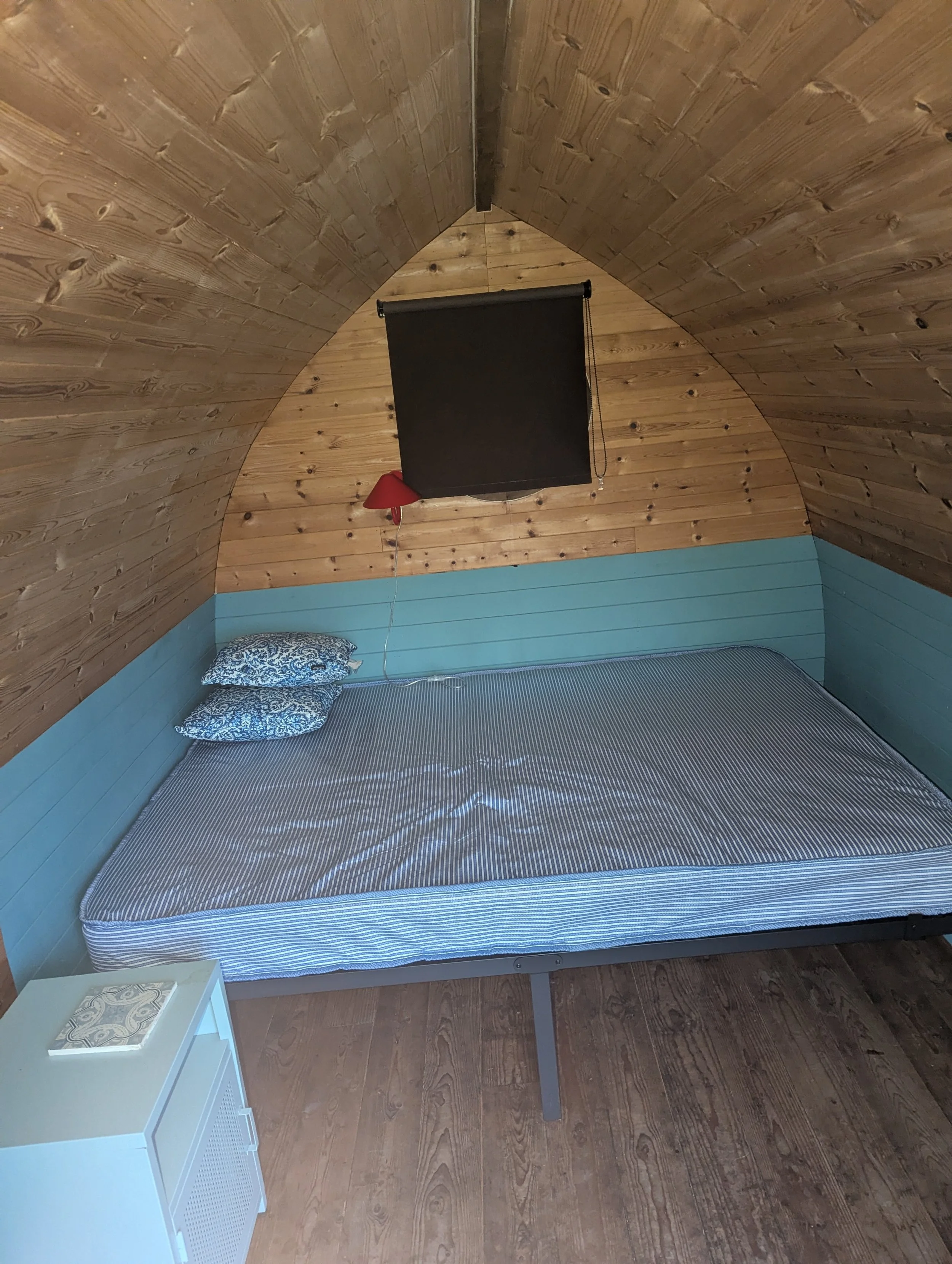
In practice, that means your packing list remains almost entirely unchanged:
Sleep System: You still need your own sleeping mat or airbed to insulate, plus your usual quilt or sleeping bag and pillow.
Camp Kitchen: You still step outside (or onto the small timber porch) with your trusted compact stove, pans, and brew kit.
Camp Routine: You fetch your water, wash up at the site sinks, and manage your gear exactly as you would on any club meet or solo tour.
The critical difference? You leave the tent pegs, guy lines, and groundsheets at home.
Warmth, Watts, and No Wet Pack-Down
Where the pod really comes into its own during the colder months is the sheer convenience at either end of the day. Inside, a modest wall-mounted heater had the timber interior warm and bone-dry within minutes, transforming the pod into a cozy sanctuary while the weather did its worst outside.
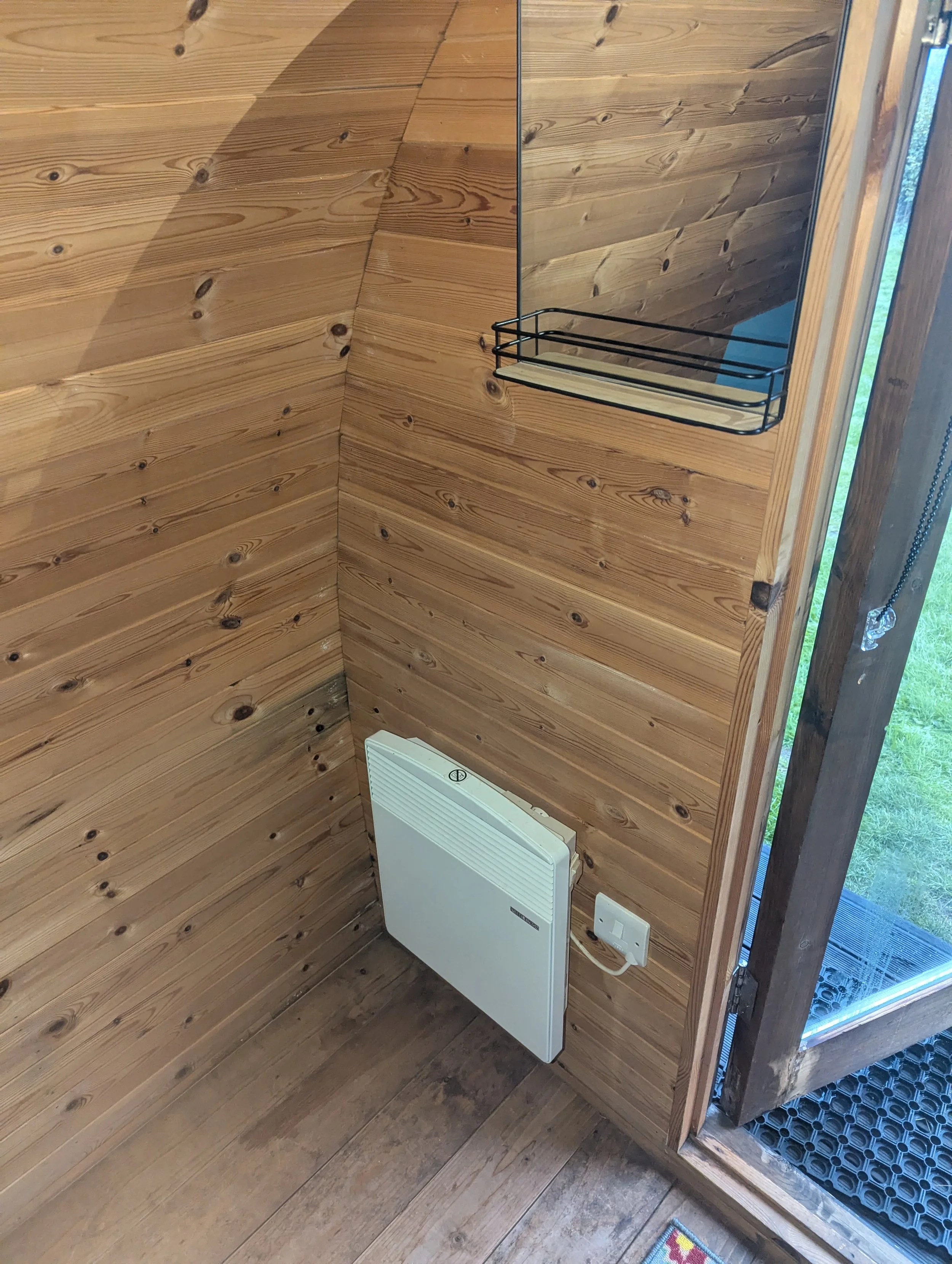
Having integrated lighting and standard plug sockets is another quiet revelation for the winter traveler. Short daylight hours often mean long evenings in camp; having good light to read a map or a book—and the ability to top up GPS units, bike lights, phones, and power banks without rationing battery percentages—is a genuine practical advantage.
Best of all, there is no "morning dread." We all know the grim chore of packing away a saturated tent in near-freezing rain, knowing it will sit damp and heavy in your bag all day. With a pod, you pack your dry sleeping kit, give the floor a quick sweep, turn the key, and you’re immediately on the move.
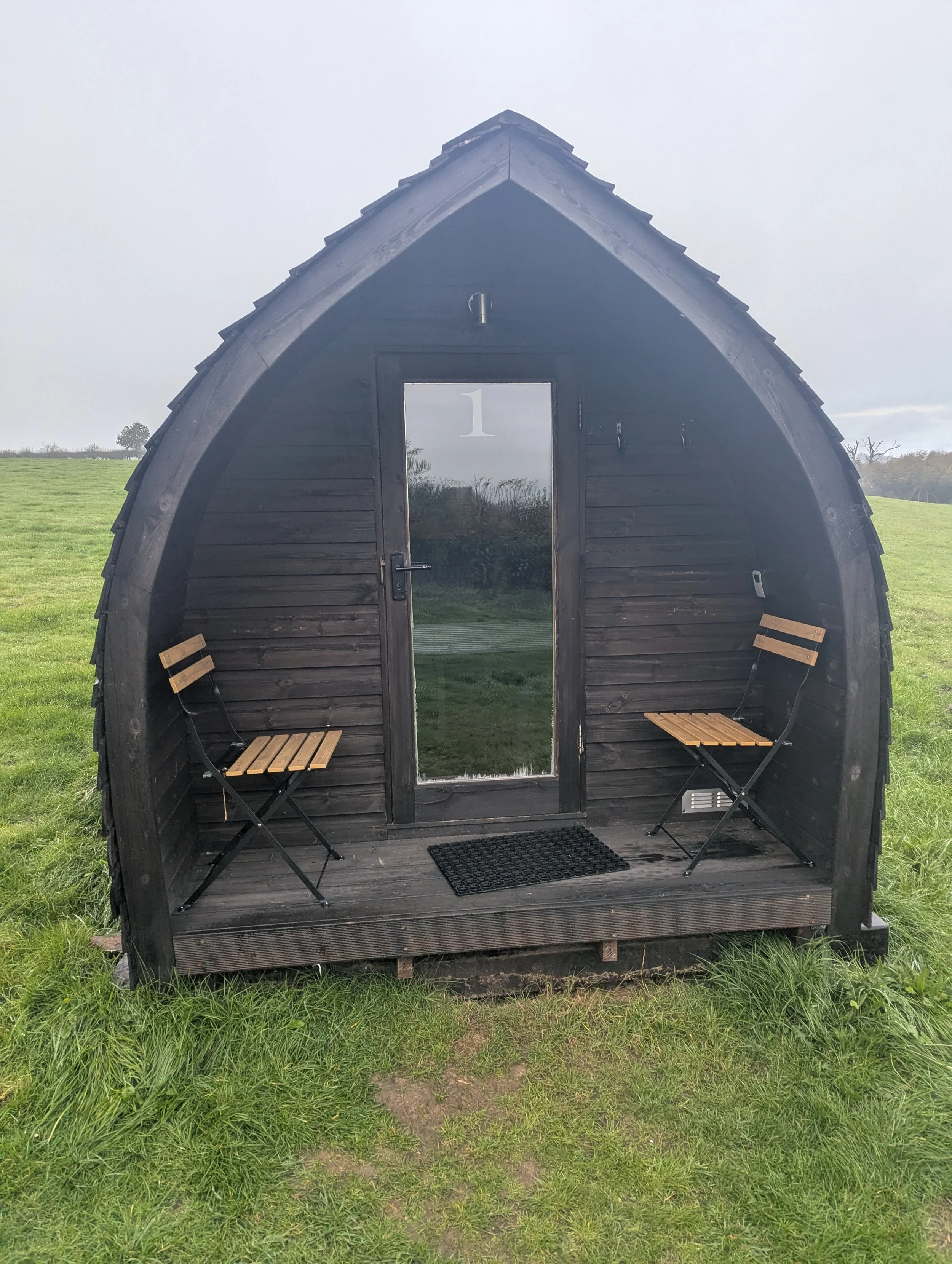
A great place to sit or cook and not get wet!
The Economics: A Fair Compromise?
Mine costs £45 for the night (mid-Wales), it certainly costs a lot more than pitching on grass. For solo lightweight travelers accustomed to modest pitch fees, that figure requires a moment of thought. It isn't a replacement for the regular summer pitches or informal gatherings we cherish.
However, viewed through the lens of a winter weekend away, it occupies a sensible middle ground. It is significantly cheaper than a B&B or local inn, yet offers total shelter, heating, and drying capability while preserving the self-reliant, outdoor ethos of a camp. For a late-season tour—or an early-spring shakedown when nights still dip below freezing—it lets you extend your outdoor season by a couple of months without needing four-season expedition canvas.
The Verdict
Purists may debate whether four walls and a roof constitute camping, but lightweight philosophy has always been about practical self-reliance, clever use of kit, and enjoying the outdoors on sensible terms.
If the choice in midwinter is between staying cooped up at home or packing your panniers for a weekend pod stay, the pod wins hands down. It keeps your field skills sharp, lets you enjoy your stove and kit, and guarantees a warm, dry retreat when the winter rain sets in.
In my case, on the night I used it, I was absolutely drenched from riding in the driving rain all day, it wasn’t a hard decision!