
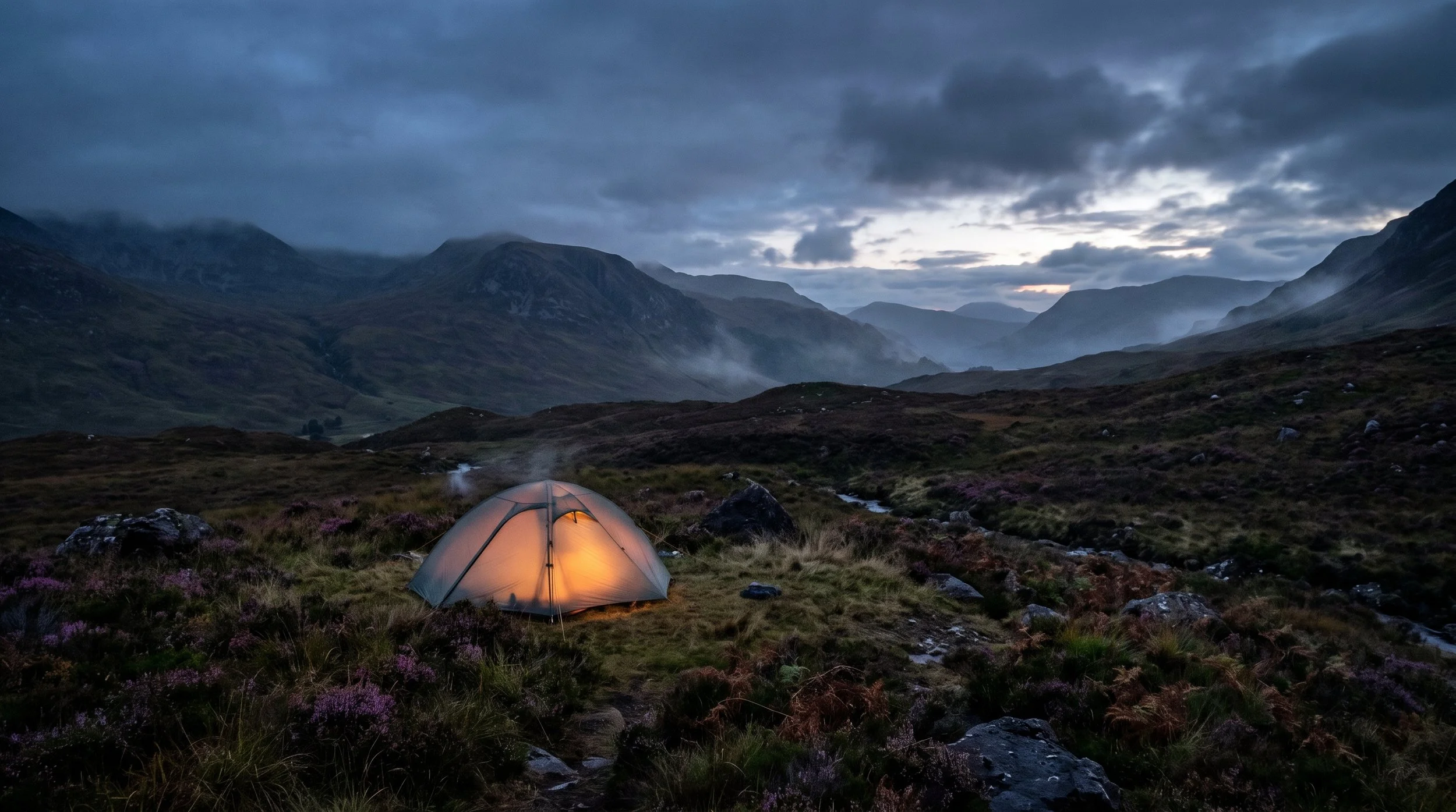
No bears or wolves in the UK!
I've done a fair amount of wild camping in the last few years in all kinds of places. Whenever this comes up in conversation, and even with my 91 year old father, comments often relate to my personal safety, “ooh Nigel, is it safe?” etc!
I've spoken to numerous people who absolutely refuse to wild camp due to safety concerns, so I decided to look at the issue in more detail.
By the way if you decide to wild camp somewhere illegally, then you may well be woken up in the middle of the night and moved on, that's a completely different subject!
I couldn’t find any official, central statistics kept specifically for "crimes against people in tents" or "campsite murders" in the UK. However, tracking major police cases and news records over the last 40 years reveals that murders or unprovoked violent attacks on recreational campers by strangers are incredibly rare.
When violent crimes or deaths do happen in tents in the UK, they almost always fall into very specific categories rather than a random horror-movie style attack.
1. Tragic Accidents (The Most Common Danger)
Statistically, a camper is far more likely to die from a freak accident or environmental hazard than a violent attacker.
Carbon Monoxide Poisoning: The single biggest hidden killer in UK tents is BBQ coals or gas heaters left inside a zipped-up tent. For example, in June 2025, a couple (Adele Tait and Craig Will) tragically died of carbon monoxide poisoning while wild camping by Loch Awe in Scotland.
Drunk Drivers: There have been horrific instances of vehicles crashing into tents. In 2019, a recreational camper, Anna Evans, was killed at a campsite in North Wales when a drunk driver drove a car through the tents in the middle of the night.
2. Domestic Violence & Known Acquaintances
When a homicide does happen at a campsite, the victim and the perpetrator are almost always known to each other, meaning it is a domestic incident rather than a threat specific to camping.
The Seaford Campsite Murder (2018): Sarah Clayton, 21, was murdered by her boyfriend in their tent at a holiday park in East Sussex following an argument.
3. Attacks on the Homeless Population (The Highest Risk Group)
If you look into "tent murders" in the UK over the last few decades, a tragic percentage of the victims are rough sleepers. Homeless individuals sleeping in tents in urban areas face a drastically higher risk of violence from passers by or peers than recreational campers. Although I would always try to avoid wild camping in urban areas anyway, to reduce the chance of being disturbed or getting into some kind of argument.
The Manchester Tent Murder (2016): Daniel Smith, a 23-year-old rough sleeper, was brutally attacked and killed in his tent by two men under a railway arch in Manchester.
Summary: Is Wild Camping Safe?
If you exclude domestic violence incidents and targeted attacks on vulnerable rough sleepers, the number of recreational campers murdered or seriously assaulted by strangers in their tents in the UK over the last 40 years is extremely close to zero.
The UK’s lack of large predatory wildlife (no bears or wolves here), mean that the biggest safety threats you will face while pitching a tent are almost exclusively bad weather, ticks, and improper use of cooking equipment.