Back in Spring 1986 Hazel Constance wrote an excellent article for The Bulletin comparing “down-filled” sleeping bags and UK/European fill standards. There is still a lot of confusion on this topic so I thought it would be interesting to visit the topic again.
Back in 1986, buying a sleeping bag felt a bit like navigating the Wild West. You had to decipher conflicting regional standards, trust the salesperson's word, and cross-reference imperial and metric weights to figure out if you were getting a good deal.
These days the landscape is vastly different—not just in how bags are filled, but in how their warmth is guaranteed.
1. Temperature Ratings
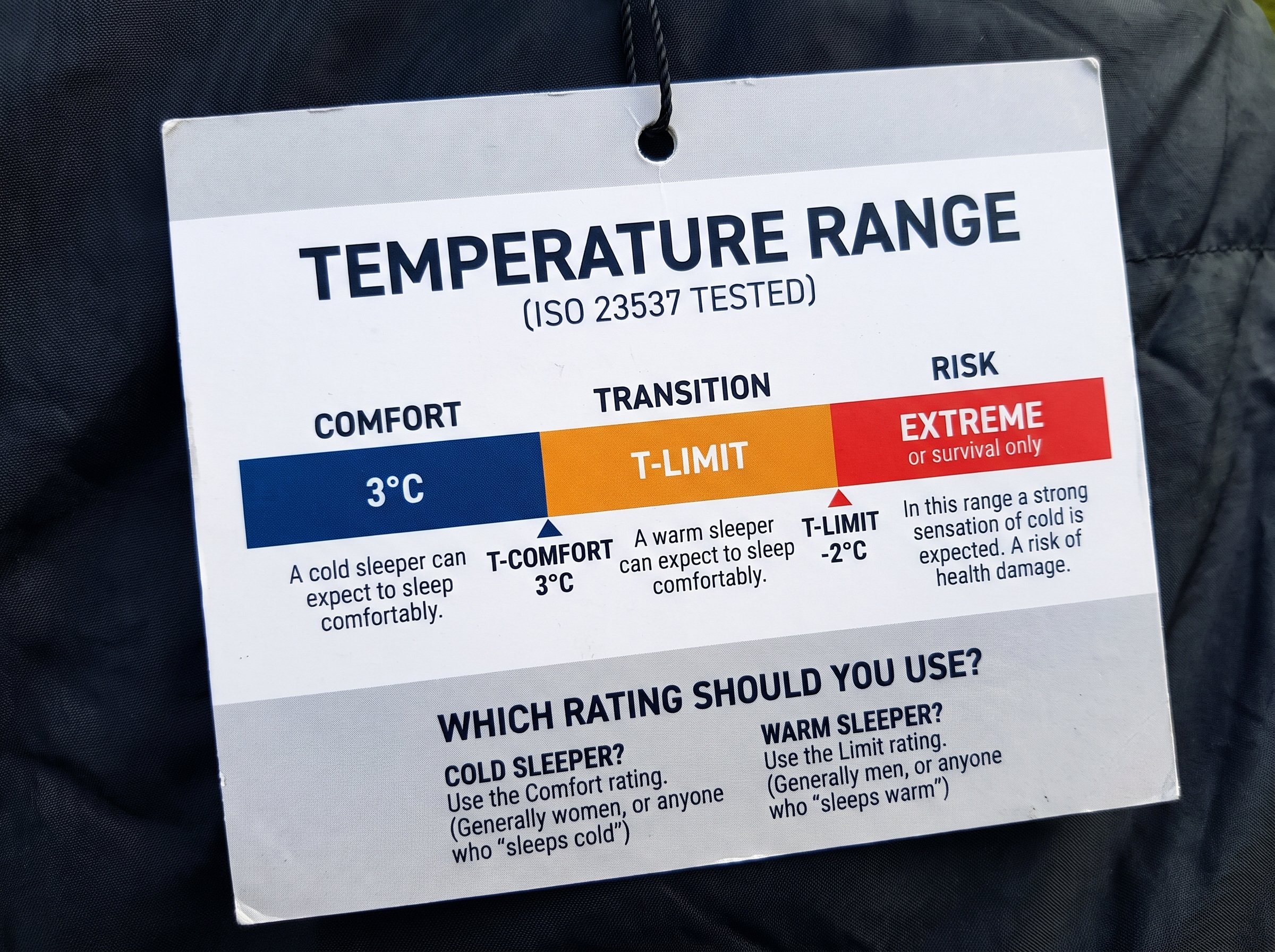
The UK and Europe now operate under the same unified international testing protocols: ISO 23537 (which superseded the long-standing EN 13537).
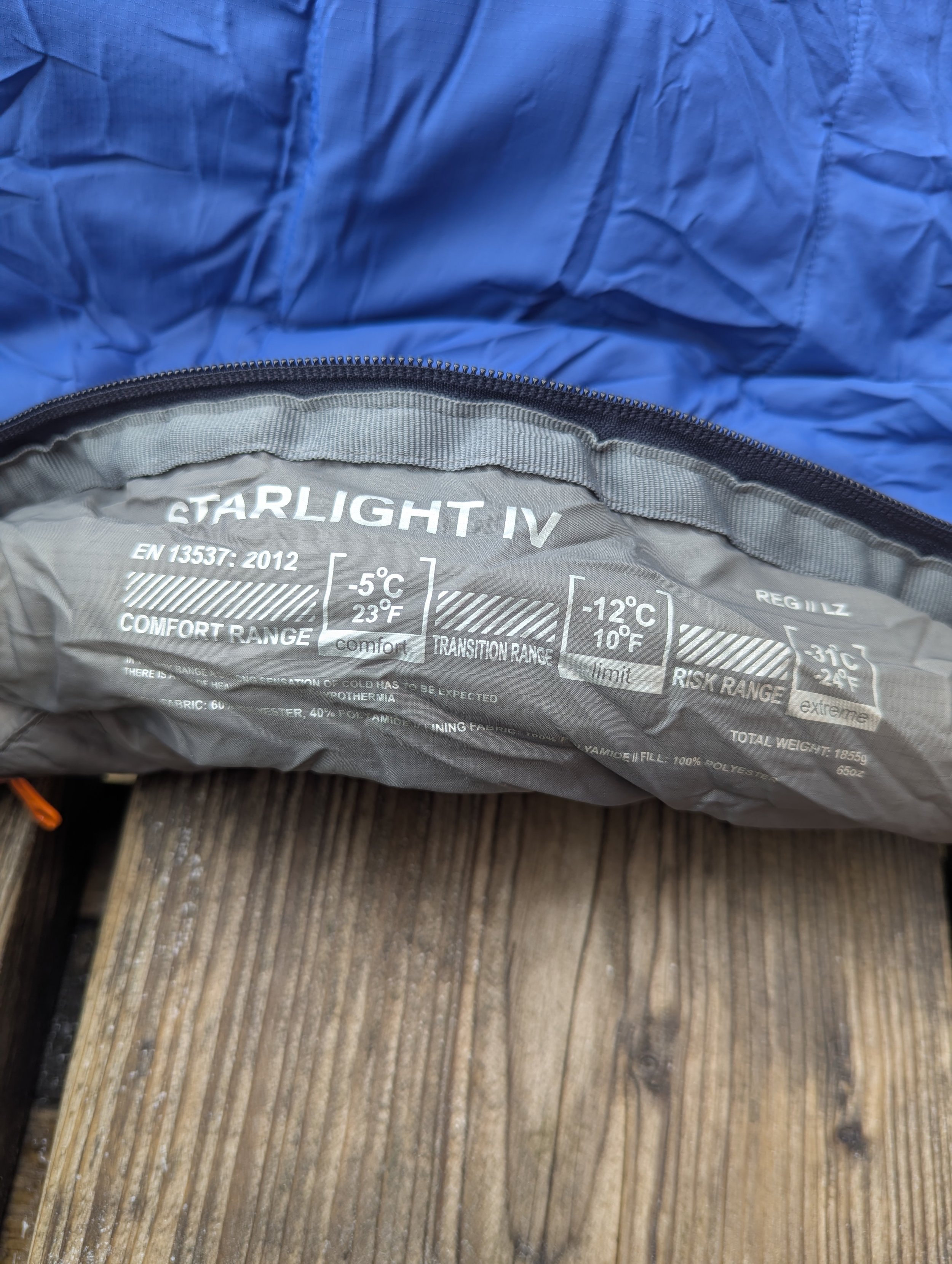
This is an example of the OLD label
Instead of relying on arbitrary manufacturer claims, sleeping bags are now tested in certified laboratories using a heated thermal mannequin. Because of this, every reputable bag on the market will provide three standardized temperature ratings:
Comfort: The temperature at which a standard person can expect to sleep comfortably in a relaxed position.
Limit: The threshold at which a standard person curled up in a thermal equilibrium will just avoid feeling cold.
Extreme: A survival-only rating indicating the minimum temperature before risking hypothermia.
Because every reputable brand uses the same ISO laboratories, the ratings are 100% reliable for comparing Bag A against Bag B.
The Real-World Variables: Where Reliability Drops
HOWEVER, the lab mannequin doesn't sweat, toss and turn, get hungry, or experience fear—all of which drastically alter human body temperature. In the real world, several factors will make a bag feel colder than its rating:
The Sleeping Pad: ISO testing assumes you are using a high-quality, well-insulated sleeping pad (specifically one with an R-value of around 4.8 or higher). If you sleep on a cheap, uninsulated air mattress, the cold ground will leach your body heat from underneath, rendering the sleeping bag's rating useless.
Biological Differences (The "Cold Sleeper" Factor): Women, on average, tend to sleep about 5 deg.C. colder than men due to differences in metabolic rate and body composition. This is why the ISO test explicitly separates the Comfort rating (calibrated for a standard woman) from the Limit rating (calibrated for a standard man).
Your Physical State: If you crawl into bed dehydrated, exhausted, or on an empty stomach after a grueling day of hiking or cycling, your body won't have the fuel to generate its own heat. The bag only retains heat; it doesn't create it.
Fit and Air Pockets: If a sleeping bag is too long or too wide for you, your body has to spend extra energy heating up all that empty, dead air space inside the bag.
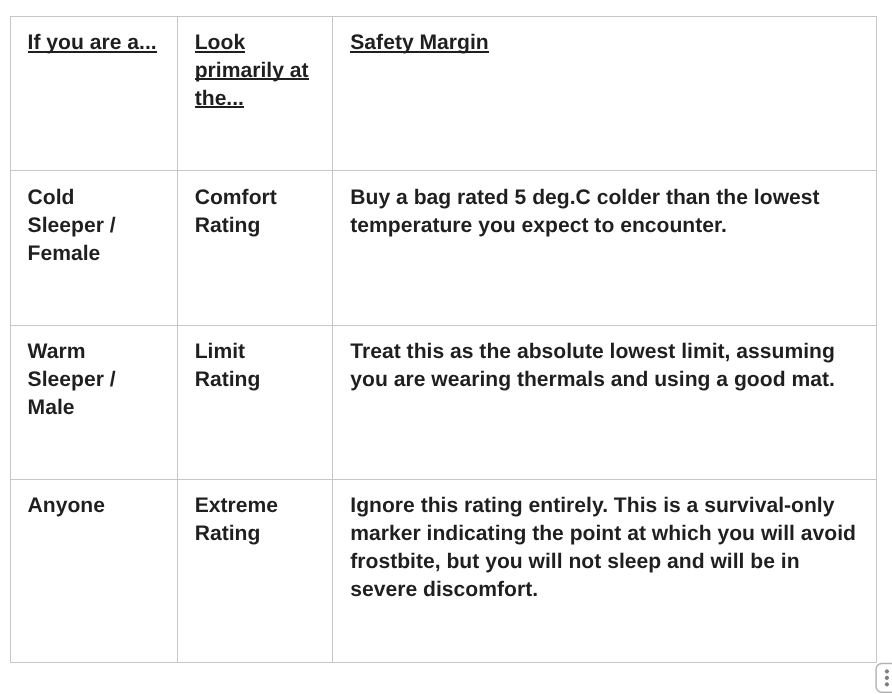
How to Use the Ratings Safely
To ensure you don't end up shivering through the night, use these rules of thumb:
2. Understanding the Fill: Beyond Fill Weight
In 1986, the primary focus was on the weight of the down (e.g., 600g vs. 1000g). Today, the outdoor industry looks at Fill Power (FP), which measures the "loft" or fluffiness of the down.
A modern ultra-lightweight bag might only use 400 grams of premium 800-fill-power down, yet provide the same warmth as an older, much heavier 1980s bag. It’s no longer just about the quantity of the down, but its ability to trap air efficiently. Furthermore, high-quality modern down is often treated with a hydrophobic coating to prevent it from clumping and losing insulation when exposed to damp conditions.
Summary for the Modern Camper
If you are looking for a new sleeping bag today, simply look for the ISO 23537 certification tag on the side of the bag, compare the Comfort and Limit ratings to your expected camping conditions, and ensure the brand uses ethically sourced, RDS-certified down.