
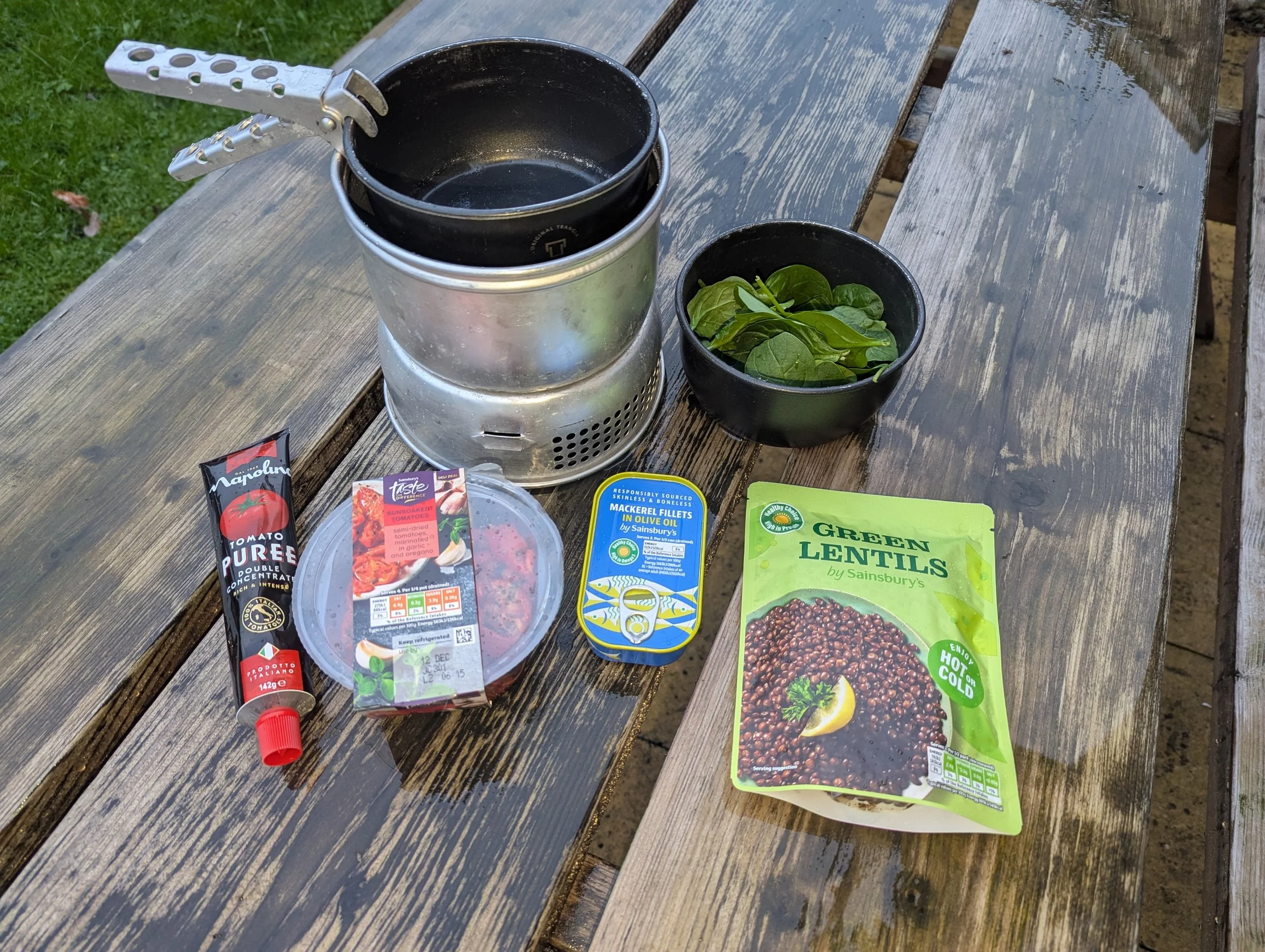
Like many, my camping trips in my small tent are usually exercises in minimalism. For years, my lightweight cook set had a solitary, predictable job: boiling the kettle for dehydrated meals and morning tea. As a self-confessed "very poor cook," the prospect of actually cooking from scratch on a lightweight stove felt like a recipe for burnt pans and wasted fuel.
But I have set myself a challenge to be more adventurous, to move past the boiling point, and to create something hearty, healthy, and genuinely satisfying without overloading my pack. After some trial, error, and a highly successful field test at my camp table, I have our new staple.
Behold: the Forager’s Lentil & Tomato One-Pot.
It requires zero knife skills, relies entirely on shelf-stable, lightweight ingredients you can find in any medium-sized supermarket (like Sainsbury’s), and includes an optional touch of campsite foraging. Better yet, it is completely adaptable depending on what you’ve got in your pack or what was in stock at your last resupply.
Here is how to make it, whether you are using a Trangia, a tiny pocket gas burner, or anything in between.
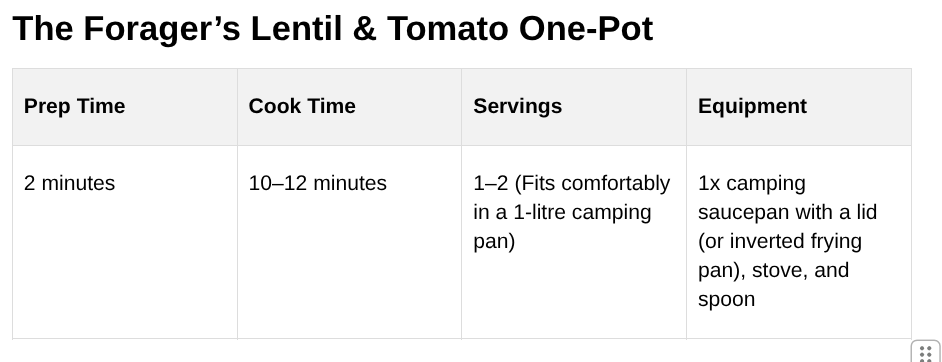
The Base Ingredients
1 pouch (250g) pre-cooked Puy or green lentils (A true trail hero—hearty, instant, and foolproof).
2 generous tbsp (approx. 35g) double-concentrate tomato purée (A screw-cap tube weighs nothing and survives weeks without a fridge).
150ml water (About half a standard camping mug, or use the volume markings on your pan).
A generous handful of young dandelion leaves (Or young nettle tops if you have gloves, or baby spinach, rinsed.
Crusty bread or flatbread to serve.
Pick Your Protein & Flavour Booster
Option A: Tinned Fish (My personal favourite!). 1 tin (125g) of mackerel, sardines, or pilchards in olive oil or tomato sauce.
Option B: Vegetarian. 4–5 sun-dried or sunsoaked tomatoes (torn), 1 tbsp oil (just spoon the seasoned oil straight from the tomato packet/tub to save carrying a bottle), and 1 crumbled vegetable stock cube.
Option C: Meat. Approx. 100g of ready-cooked meat (such as cured cooking chorizo, sliced salami/pepperoni, or pre-cooked chicken/pork pieces) to make things ultra-flexible.
The Easy Method
The Sizzle: Place your saucepan over a medium-high heat. (I used my Trangia without the simmer ring).
If using Meat or Veg (Option B/C): Toss the meat or sun-dried tomatoes with their oil into the pan. Fry for 1–2 minutes, stirring constantly until the oils release. Squeeze in the tomato purée and stir for 30 seconds to caramelise it.
If using Tinned Fish (Option A): Pour just the oil or sauce from the tin into the pan (leave the fish in the tin for now). Squeeze in the tomato purée and stir for 30 seconds in the hot oil.
The Simmer: Tip the lentils into the pan (along with the crumbled stock cube, if going vegetarian) and pour in the 150ml of water. Stir well until the purée dissolves into a rich, glossy sauce. Turn your stove down to a gentle simmer (use a simmer ring if on a spirit burner), cover with your lid to trap the heat, and let it bubble gently for 8–10 minutes, stirring occasionally.
The Finishing Touch: Remove the pan from the heat. If using fish, tip the mackerel, sardines, or pilchards straight from the tin into the pan and break them up gently with your spoon (much less messy than doing it beforehand!). Stir in your rinsed dandelion leaves. Put the lid back on for 1–2 minutes to let the greens wilt and the fish heat through.
Eat: Serve straight from the pot, using your bread to mop up the rich, smoky sauce.
Notes
About Those Dandelions: Dandelion leaves have a wonderful, peppery bite that acts like wild rocket. Look for small, young leaves from the centre of the plant (the big outer ones are too bitter). Only forage well away from busy roads and popular dog-walking paths, and give them a quick rinse with a splash from your water bottle first.
Fuel & Clean-Up Efficiency: Always cook with a lid (or use your frying pan upside down). It traps the heat, cuts your simmering time in half, and saves a massive amount of fuel. When you’re finished, immediately wipe the warm pan out with a scrap of bread—the natural oils mean nothing sticks, making washing up at a campsite tap a breeze.
Whether you're testing this at home on the back lawn or miles from anywhere on a wild camp, it’s a brilliant way to expand your camping kitchen. Give it a go, customise it with whatever is on the shelves!